How do paparazzi work? They follow celebrities persistently, shoot full-figure frames from a distance with fast telephoto lenses, and pass the best images to an agency that sells them to publications. The photo alone rarely proves how a meeting came about.
This guide traces one image from capture to published story, and it is background for judging celebrity gossip built on candid pictures.
Paparazzi versus celebrity photographers
Paparazzi are defined by persistence. A practitioner account on Photography Bay separates them from celebrity photographers by how they behave: paparazzi constantly follow celebrities and intrude on their private lives, while celebrity photographers prefer to wait for the target to come out in public, snap the photos and leave.
The distinction matters when judging a picture. A red-carpet shot belongs to the second group, because the appearance was public and expected. A frame of someone walking down a street or leaving a building usually belongs to the first, because the photographer chose to follow rather than wait for an invitation.
The same account describes the job as slow and often dull. It refers to hours upon hours of waiting and watching that can become frustrating before a brief opportunity appears. A candid image therefore tends to be the product of long, deliberate effort rather than a lucky glimpse. Whether that effort ended in a chance encounter or a known location is something the image does not reveal.
The photographer also manages visibility. The same account describes keeping the camera concealed in a bag until the right moment arrives. The result is that most of the working day produces nothing, and the saleable frames come in a short burst.
Equipment and positioning
Equipment is built around reach and speed. A Picture Correct guide to news and paparazzi work says a kit needs to cover 28mm to 200mm with two fast zooms, and defines fast as large-aperture f/2.8 lenses. For long-distance work it points to a 300mm lens with a doubler.
It also notes that a full-frame sensor is, for all intents and purposes, the same size as a 35mm film frame. That is the format the lens advice assumes. A fast, long lens lets a photographer stay back from the subject, which suits shooting from a vehicle or across a street.
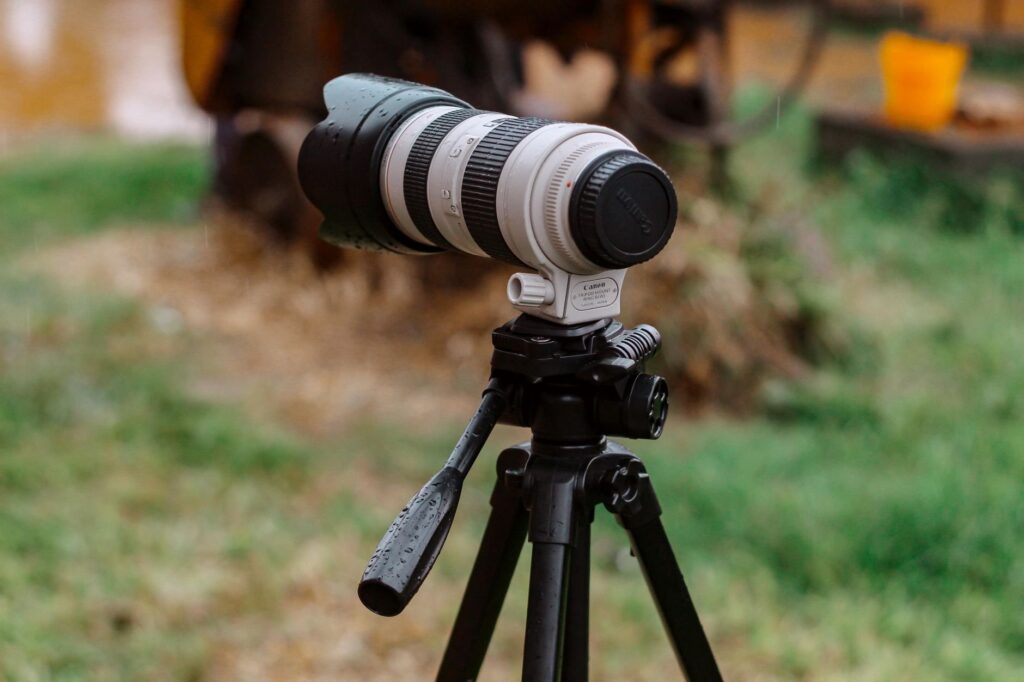
A telephoto zoom with a lens hood on a tripod. Long lenses of this kind are what allow a photographer to frame a subject from across a street rather than at arm’s length.
Not everyone has that glass. The Photography Bay account says that without the required telephoto lens, a photographer must do everything possible to get in close. Distance therefore separates two working styles: long lenses mean the photographer can stay far away, while short lenses force proximity and more confrontation.
What makes a frame sellable
The same account gives blunt rules for frames that will sell. All photos need to be taken from in front of the celebrity, and side profiles will not sell. It also advises shooting vertical, never horizontal, with the full figure from head to toe.
These rules explain why published candid photos look alike. Many show a person facing the camera, walking, in a tall frame that fits a magazine page. The look comes from what buyers want, which is worth remembering: a picture is selected and shaped by market demand as much as by what happened.
From capture to agency desk
After the shoot, images move to a photo agency. The agency sits between photographer and publication, and it also guides the shoot itself. The Photography Bay account records agency advice to follow the subject to the next location and keep shooting, because more frames and more locations give editors more to choose from.
Agency selection is the stage where a long day shrinks to a few usable images. A photographer may shoot many frames, but the picture desk looks for the ones that match the buyer’s needs: a recognisable face, a clear frame, a vertical full figure. Editors then offer those images to outlets.
A general office scene of one person reviewing a grid of portraits on a monitor, illustrating the selection step at which many frames are narrowed to a few. It does not show a real agency desk.
Volume of output can be small. The Picture Correct account describes a session in which about five frames were shot, and those pictures were in every UK national newspaper the next day. Reach, in other words, does not depend on how many pictures were taken. A handful of strong frames can travel through the whole press within a day.
How a photo becomes a story
A published paparazzi photo is only the starting point of a story. The picture supplies a place, a time and a facial expression, and the outlet supplies the narrative. Because the frames are often silent about context, a caption or headline can imply a mood, a relationship or a conflict that the image does not establish.
That gap is where gossip grows. A single full-figure frame of someone looking away or walking quickly can be described as upset, secretive or rushed. The same frame could equally show an ordinary moment. Treat the caption as a claim and the photo as evidence only of who was where, roughly when.
An open magazine with large photographs across the pages. Layout gives pictures a prominent place, and the text beside them is where a story is attached to the image.
Questions to ask of a candid photo
Was the setting public? A street or event is consistent with the public-place accounts below, while a private setting raises a different question.
Does the caption claim more than the frame shows? Look for mood, motive or relationship being asserted from a single image.
Is the shot the standard saleable type? A vertical, front-facing, head-to-toe frame reflects buyer demand, not necessarily anything unusual about the moment.
Does a second independent source back the story? The step-by-step method in how to tell if a celebrity rumor is true applies directly to stories built on photographs.
Staged tip-offs and what a photo cannot prove
Persistent following does not exclude cooperation. A photograph taken in public with a subject facing the lens is consistent with a chance encounter, a long stakeout or an arranged appearance, and nothing in the frame separates them. That is a reason for caution rather than a verdict on any particular picture.
The practical rule is to rely on what a photo can show and to be wary of what a caption adds. Where a story rests on an unnamed insider, compare it with the kind of anonymous claim explained in what is a blind item. Both formats ask readers to accept a framing they cannot check for themselves.
Legal limits on paparazzi
Legal limits depend on place, and the supplied accounts describe practice rather than statute. The Photography Bay account says shooting is acceptable as long as the photographer is not blocking the subject and is not on private property. The same writer describes the photography as totally legal in the public streets of New York City.
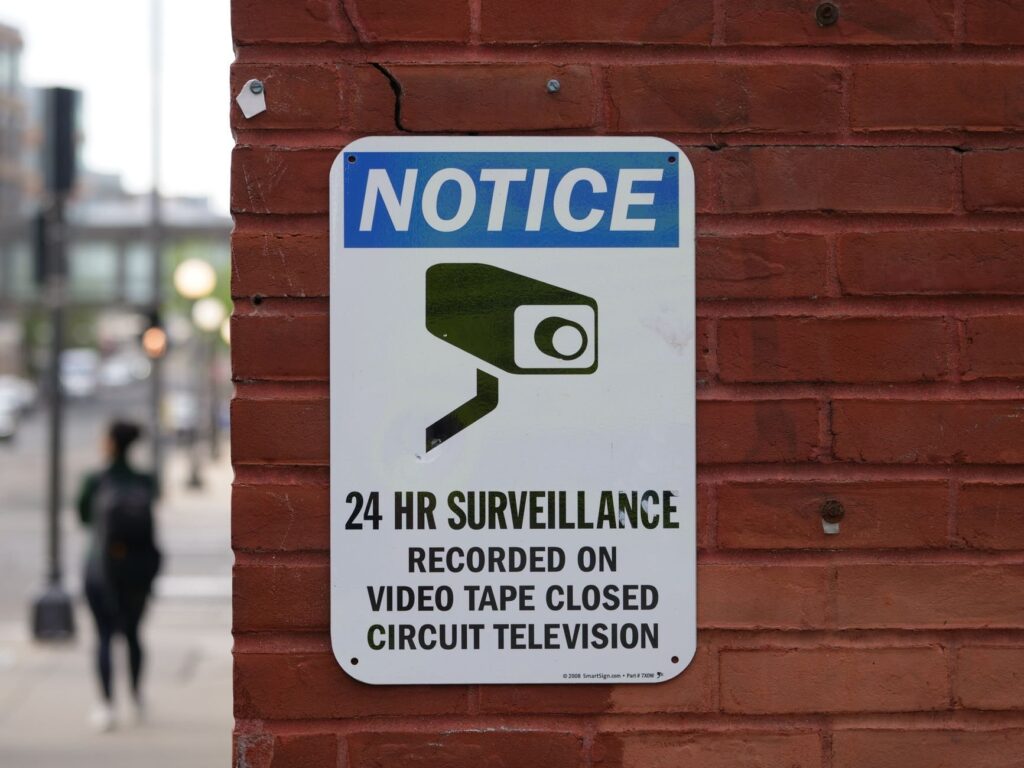
A recording notice on a brick wall, shown only as a general illustration of signage about filming in public. It is not evidence of any specific paparazzi law.
Two conditions stand out in that account. Blocking a person and entering private property are the lines it treats as limiting a shoot. These are a practitioner’s working rules and a report of one city, so they should not be read as a legal summary of every jurisdiction. Anyone who needs to know what applies in a specific country or state should check its statutes or a legal summary.
For readers judging a story, the legal question and the ethical question are separate. A photo can be lawfully taken in a public street and still be used to push an unfair caption. Legality says how the picture was gathered; it says nothing about whether the story attached to it is accurate.
Frequently asked questions
How do paparazzi work day to day?
They follow targets, wait for hours, keep the camera out of sight until the moment arrives, and then shoot quickly. Frames go to an agency that selects and offers the best to publications.
How do paparazzi photos become stories?
An agency selects the frames that match buyer needs, such as vertical full-figure shots facing the camera, and outlets add captions and text. The picture shows who was where; the narrative comes from the outlet.
What laws limit paparazzi?
One practitioner account says shooting is acceptable if the photographer is not blocking the subject and is not on private property, and calls street photography in New York City totally legal. Rules differ by jurisdiction, so check local statutes.
How much do paparazzi photos sell for?
A single fixed price cannot be quoted. One account describes about five frames reaching every UK national newspaper the next day, which shows that a few strong images can travel widely.
Do celebrities tip off paparazzi?
A candid photo cannot show whether a meeting was arranged, because a stakeout and a tip-off can produce the same frame. Treat the caption’s claims separately from the image.
Learning how to tell if a celebrity rumor is true starts with tracing it to the original statement from the person involved or their representatives, and treat every retelling, screenshot and photo as unconfirmed until it matches that statement.
Picture a screenshot in a group chat: a famous actor is supposedly ending a relationship, a grainy photo is attached, and the headline is in capital letters. The workflow below resolves that situation in order: check the page, trace the claim, test the photo, then look for the primary statement.
The method suits readers who want a repeatable habit rather than a list of warning signs. For wider context on how celebrity gossip circulates and gets checked, the hub guide covers the broader picture.
When a rumor first reaches you
The fastest check is to stop reading in the tab where the rumor appeared. A university fact-checking guide advises opening a second window to look up the claims, author credentials and organizations that appear in an article. For a celebrity story, that means searching the name of the person involved alongside the specific claim, and looking up who wrote the piece and who published it.
A written checklist keeps the order fixed, so a convincing headline cannot skip you ahead to sharing.
Do this before reacting or forwarding. Most rumors reach people as a headline in a news app, a social post or a forwarded image, and none of those formats shows where the claim began.
Print and screen coverage often sit side by side, which is why the second tab matters: each version of a story can be checked against the others and against the original.
If the second tab turns up nothing beyond copies of the same headline, the rumor is still unconfirmed. The next section helps decide how much weight the page itself deserves.
Reading the page for warning signs
The look of a story can tell you where to look harder. The table below turns the main warning signs into a first move for each.
What you notice
What it suggests
Planning use
Headline with excessive capital letters or emotional language
A serious red flag for an exaggerated or provocative story
Pause before sharing and look for the same claim in a calmer, named report
A claim that seems too good, too weird or too reactionary
It probably is false
Search the claim independently instead of trusting the page that makes it
A web address that is a slight variant of a well-known site
Possible deceptive site posing as a familiar outlet
Investigate the site and reach the real outlet by its own address
An article that cites sources
Worth checking, because an official-sounding group can still be biased
Open each cited source and see whether it actually says what the article claims
These signs come from the same university fact-checking guide, which treats them as prompts to investigate rather than final verdicts.
A story can pass every one of these checks and still be wrong. Calm formatting is not proof, so the next job is to find where the claim began.
Tracing the claim back to its origin
A rumor is only as strong as its earliest traceable source. Follow each link, quote and “according to” phrase backwards until you reach either a named person speaking on the record, an official statement, or nothing at all. The guide above recommends checking the sources an article cites, and warns that a source with an official-sounding name can still be biased.
Does repetition count as confirmation?
No. Many outlets repeating a rumor can mean they all picked it up from the same place. Entertainment journalism includes speculation, and one gossip blogger describing coverage of a Bond casting search says some of the speculation was strategically leaked or placed information. A placed item can appear across many outlets while remaining a claim from a single interested source.
A stack of identical front pages shows how one report can multiply: many copies in circulation do not mean many independent confirmations.
Use these decision bullets when you reach the end of a trail:
Named person on the record: treat the claim as stronger, then compare it with any statement from the celebrity or their representatives.
Unnamed insiders only: treat the claim as unconfirmed, however many outlets repeat it.
Trail loops back to a gossip post or social account: stop there and look for a primary statement instead of more retellings.
Source cited but not opened: open it before judging, since the cited page may not say what the article claims.
For a closer look at outlets themselves, see are celebrity gossip sites reliable. Photos are the next common weak point.
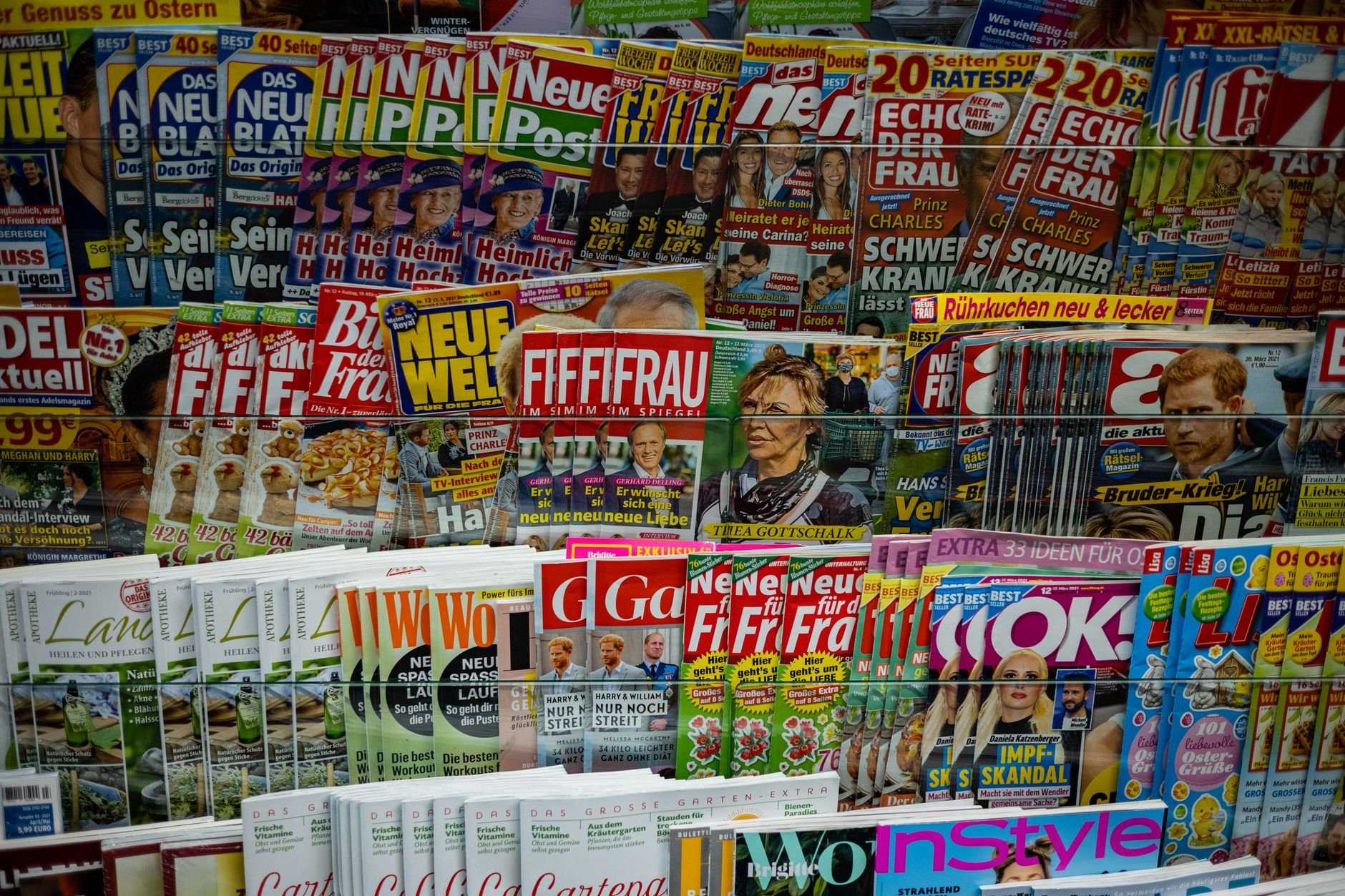
Tabloid covers use close-up portraits and bold headlines to sell a story, so the cover alone shows the pitch, not the evidence behind it.
Checking a photo attached to a rumor
A photo makes a rumor feel settled, but the university guide is blunt that not all photographs tell the truth, and images are often edited or digitally manipulated. A real photo can also be attached to the wrong story, so the test is whether the picture belongs to the claim being made.
How reverse image search works
Reverse image search starts from a picture instead of words. According to the same guide, it can help discover the source of an image and its possible variations. For a rumor photo, the aim is to find the earliest appearance and any different versions, such as a cropped or altered copy.
Tools anyone can use
Google image search: returns similar images and websites carrying the image or a similar one, which shows where else the picture appears.
Google Lens: identifies an image and the objects around it, useful when the picture shows a place, product or other recognizable item.
Bing Visual Search: searches the web using an image instead of text, giving a second set of matches when the first yields little.
These descriptions come from the university fact-checking guide. Running the same picture through more than one tool is reasonable, because each returns its own matches.
Reverse image search shows where a picture has been, not whether the story around it is true. If the earliest match predates the rumor, the photo is being reused. If it appears only in the rumor’s own retellings, the photo has no independent support. Candid pictures raise a separate question about where they come from, and how do paparazzi work explains how such images reach the press.
A workflow that ends at the primary statement
The steps above combine into a routine that works on any rumor. The last step is the one that settles most cases, because a primary statement outranks every secondhand account.
Open a second tab. Look up the claim, the author and the publisher before reading further.
Read the page for warning signs. Note shouting headlines, implausible claims and web addresses that mimic well-known sites.
Open every cited source. Confirm that each says what the article says it does.
Trace the claim to its earliest version. Ignore the number of outlets repeating it and look for who said it first.
Test any photo. Run it through Google image search, Google Lens or Bing Visual Search to find its source and variations.
Find the primary statement. Look for an official statement from the celebrity or their representatives, or a report that quotes one directly, and compare its wording with the rumor.
If the primary statement contradicts the rumor, the rumor is false as stated. If it confirms the rumor, the claim is supported by the strongest evidence available. If it is silent, the rumor stays unconfirmed.
When there is no statement yet
Silence is common early in a rumor’s life, and the right move is to wait, not to settle the question by volume of coverage. The guide notes that information, like eggs and milk, can have an expiration date, so use the most up-to-date material and recheck later instead of relying on a report that may have been overtaken.
Holding back suits anyone about to share a claim that could embarrass or harm a real person. Sharing a correction later rarely reaches everyone who saw the original.
Frequently asked questions
Question
Answer
What is the fastest way to check whether a celebrity rumor is true?
Open a separate tab and search the claim, the author and any cited sources, then look for a statement from the celebrity or their representatives. A rumor with no such statement stays unconfirmed.
What are the signs of a fake celebrity story?
Exaggerated headlines with heavy capitals or emotional language, claims that seem too good or too weird, and web addresses that imitate well-known sites. Each is a reason to investigate, not a final verdict.
Does a rumor repeated by many outlets count as confirmation?
No. Repetition can trace back to one placed or leaked item, as a gossip blog says happened with some Bond casting speculation. Only an origin you can name and check counts.
How do I check whether a photo attached to a rumor is real?
Run it through reverse image search, such as Google image search, Google Lens or Bing Visual Search, to find its source and variations. Remember that photos can be edited or digitally manipulated.
Can an official-sounding source still be wrong?
Yes. A source that sounds official can be biased, so read what it actually says instead of trusting its name.
decoratoradvice com is a home decorating blog covering decor, gardening, smart home devices and renovation. This list covers what the site shows, how people type its name, and how to judge it.
Question
Short answer
What is it?
A home decorating blog with decor, garden, smart home and renovation articles
Bylines appear on articles; the About page names none
Content quality
Mixed: some clear guides, many garbled titles
Best suited to
Readers browsing home ideas who check claims themselves
What decoratoradvice.com is, in plain terms
decoratoradvice.com presents itself as a home decorating blog. Its articles cover interior decor, gardening and outdoor tips, smart home devices, cleaning products and renovation.
A decor blog first. The core subject is the home: dens, exteriors, textures and trends. Reading times on the home page run from about 3 to 10 minutes per article.
A news-style archive. A Latest News archive collects posts, including product launches and local service stories.
A guide section. Editor’s Picks holds partnership and sponsorship guides, which is unusual for a decor site.
A plain site structure. Home, About, Contact and a Frequently Asked Questions page are all listed in the navigation.
The site does not state who runs it. That is the one gap worth knowing about, and it shapes how much weight to give any single page.
Every way people type decoratoradvice com
Many different strings lead to the same single website. People type the name with spaces, with a protocol, with stray punctuation or with no dot at all.
The clean form. decoratoradvice.com is the standard spelling, and decoratoradvice.com/ with a trailing slash points to the same home page.
Spaced forms. “decoratoradvice .com” and “decorator advice .com” add a space, usually from a voice note, a copied snippet or a quick guess.
No dot. “decoratoradvicecom” is what you get when the dot is dropped.
Broken protocol strings. “https//decoratoradvice.com”, “https// decoratoradvice.com” and “https// :decoratoradvice.com” are malformed copies of a normal web address. A browser may not accept them as typed.
Partner searches. “decoratoradvice .com partners” and “partners decoratoradvice .com” are the same search in different word order, aimed at the partners page.
Odd title strings. One page title reads “bet9ja has become household decoratoradvice name”. It has nothing to do with decor and shows how stray, garbled text turns up on the site.
Decor planning is the site’s stated subject, whatever odd strings people type to find it.
If you reached this page from any of these phrasings, you are looking for the same domain. Retype the address cleanly instead of pasting the broken version.
What the decoratoradvice site publishes
The decoratoradvice site publishes across four loose themes, and its recent items show the range.
Home and den styling. A recent item is “Decorator’s Guide: Transform Your Den with Custom Luxury and Rich Textures”.
Exterior and fencing. “Vinyl Fencing in Burbank: Costs, Codes and 5 Installers Compared” is a local, comparison-style piece.
Smart cleaning. “Tineco Day and Tineco Pet Day: Where Smart Cleaning Meets Beautiful Homes” is a product-themed feature.
Home services news. “Bulqit Launches in Austin, Bringing a New Way to Buy Recurring Home Services” reads like a launch announcement.
Dates are thin: titles carry only the year 2026 and no specific publication dates. Prices, costs and installer claims in such articles should be checked against the providers themselves.
Checks that separate the real decoratoradvice site from lookalikes
Lookalike sites are a fair worry whenever a name is typed with spaces or odd punctuation. A short routine covers most cases.
The address bar is the first place to confirm which domain you are actually on.
Read the address bar. The domain should be exactly decoratoradvice.com, with nothing added before the dot or after .com.
Retype, do not paste. Malformed strings such as “https//decoratoradvice.com” can come from forwarded messages. Type the plain domain yourself.
Check the navigation. The real site lists Home, About, Editor’s Picks, Exterior Ideas, Home Trends, Latest News, Contact and a Frequently Asked Questions page.
Be wary of download prompts. Some titles mention ebooks and ebook links. Treat any file offer with caution and do not install anything you did not look for.
Watch for repeated phrasing. Titles repeating “Sites Like DecoratorAdvice.com” and “Latest News DecoratorAdvice.com” across many pages are a sign of templated content, not of a different site.
Never enter payment details because of a decor article. A blog post is not a reason to share card or login data.
The decoratoradvice partners page and sponsorship guides
The site has a Partners page and an Editor’s Picks section about partnership requests. The guides there cover verifying partnership requests and disclosing commercial relationships.
Verifying requests. The guides explain how to check a partnership offer before accepting it.
Disclosure. They also cover stating commercial relationships openly, a standard expectation for any publisher.
What to do with that. If you are weighing a partnership approach, read those guides critically. They are general content, not an official offer from any named party.
A reader should still ask whether a given article is editorial or paid. Product-led titles are common on the site, so treat brand features as possible promotion until proven otherwise.
Reading decoratoradvice with a comics and movies eye
A comics and movies reader can apply the habits used for entertainment rumours to this site. Nothing in the site’s content links it to comics, film or gossip, so the useful overlap is method, not subject.
Check the byline. Bylines such as Gary Cripps and others appear, but the About page names no authors. A rumour with no verifiable source gets the same treatment.
Distrust garbled headlines. Titles like “Frogoscape” or “Dadvice Interiors” would be a red flag on any news site.
Look for the mix. The site mixes many unrelated topics, so judge each page on its own merits rather than the domain as a whole.
Separate promo from review. Trailer hype and product hype look alike. Ask who benefits from the claim.
Cross-check the facts. Costs, codes and product claims belong with the original provider, as a box-office figure belongs with the studio report.
Who decoratoradvice suits, and who should look elsewhere
decoratoradvice suits casual browsers looking for home styling ideas who are willing to verify details independently.
Suits: readers collecting ideas on dens, exteriors, garden tips and smart cleaning gadgets, and anyone curious about how sponsorship disclosure is explained.
Look elsewhere: readers who need named, accountable authors, firm publication dates or professional renovation, legal or safety guidance. Fencing codes and installer costs, for instance, should come from local authorities and the installers.
Look elsewhere: anyone hoping for comics, movies or entertainment coverage. That is not what the site publishes.
The last step is simple. Type the plain domain yourself, read each page on its own merits, and leave any page that asks for a download or personal details without a clear reason.
Searching tennis news from latestsportsbuzz leads to a general sports news site with the tagline “Experience the Unpredictable in Sports”. It covers international and emerging sports, and its navigation does not list tennis as a label of its own. The table below gives the short version.
Question
Answer
What is it?
A sports news site focused on international and emerging sports
Navigation labels
International Sports, Emerging Sports, Sports News, About Us, Contact
Stories shown lately
India T20 World Cup final, F1 Austrian Grand Prix, Madrid F1 tickets, San Diego game-day spots
Where tennis would sit
Most likely under Sports News or International Sports; check the site’s own menus
Main weakness
Repetitive, search-style titles in the editor’s picks list
Best use
Quick browsing, followed by a check against a primary source
What latestsportsbuzz is and how it presents itself
latestsportsbuzz is a sports news site that describes its focus as international and emerging sports. The home page carries the tagline “Experience the Unpredictable in Sports” and a short navigation bar with five labels: International Sports, Emerging Sports, Sports News, About Us and Contact.
The site names no owner or team beyond individual bylines. That matters for a news site because readers cannot tell who stands behind its editorial choices, so the bylines and the stories themselves are the only trust signals on offer.
The site also mixes many unrelated topics. A race report can sit beside a ticket guide or a list of places to watch a game, so each page deserves its own judgement rather than a blanket verdict on the whole site.
An archive post titled “LatestSportsBuzz.com Archive…” also exists, which suggests the site has been publishing for a while. Beyond that, its history is not laid out for readers.
Tennis news on latestsportsbuzz: where to look
Readers who type tennis news on latestsportsbuzz or tennis news from latestsportsbuzz are most likely hunting for a tennis story or a tennis shelf. The navigation shows no tennis label, so the practical route is through Sports News or International Sports.
Tennis is a global sport, so a general site would normally file it with international coverage rather than give it a section of its own.
A related phrasing is posts category tennis latestsportsbuzz. It assumes a category archive with that name exists. The facts about the site do not show one, so treat the phrase as a search habit rather than a confirmed menu item.
If you want tennis coverage, try these steps:
Open the Sports News section and scan headlines for player or tournament names.
Repeat the scan in International Sports, where tournament coverage would naturally fall.
Use the site’s search box, if one is present, with a player or event name instead of the word “tennis”.
If nothing appears, accept that the site may not cover the sport at all.
Football and golf posts on latestsportsbuzz
Football and golf are the other two sports people pair with this brand in searches. The phrasings vary: football and golf posts latestsportsbuzz, football and golf posts on latestsportsbuzz, football and golf article latestsportsbuzz, and plain football latestsportsbuzz all point to the same question.
The question is whether the site keeps a football or golf archive. The navigation does not list one. The stories shown on the home page lean towards cricket and motorsport: the India T20 World Cup final and the F1 Austrian Grand Prix. Football and golf are not among them.
Another variant, category football on latestsportsbuzz, assumes a dedicated category page. The same caution applies. Look for the category in the menus before relying on the idea that it exists. If a football or golf story turns up under Sports News, check its date and byline before treating it as current.
latestsportsbuzz rhythmic gymnastics and the emerging sports shelf
The search latestsportsbuzz rhythmic gymnastics fits the site’s Emerging Sports label better than any other. Rhythmic gymnastics is the kind of discipline an emerging-sports section would plausibly cover, though the facts do not show a specific story on it.
Rhythmic gymnastics combines dance and apparatus work, and it is the sort of discipline a niche sports shelf might feature.
“Emerging” is not defined on the home page, so the label could mean newer competitions, fast-growing sports or simply less mainstream ones. Read the stories under it before assuming which.
For a niche sport, the best check is the governing body. National and international federations publish results, schedules and rules. A news site should agree with them on scores, dates and names, and any gap is a reason to trust the federation over the site.
What the recent stories show about the site’s range
The recent stories show a broad and uneven range rather than a single beat. They include a major cricket final, a Formula 1 race, a ticket story about a Madrid F1 event, and a guide to game-day spots in San Diego. An article tied to ISSA also appears.
That spread splits into three types of content:
Event reports. The India T20 World Cup final and the F1 Austrian Grand Prix are straight news subjects. Their value depends on accuracy and timeliness.
Service pieces. Madrid F1 tickets and San Diego game-day spots are practical guides. Prices, availability and venue details change, so confirm them with the organiser or the venue.
Organisation or industry items. The ISSA article sits outside match coverage. Judge it on its own terms.
The editor’s picks list uses repetitive, search-style titles. Similar wording across several headlines is a common sign of writing aimed at search results. It does not make a story wrong, but it means the headline tells you little. Read the first paragraphs to see whether there is real reporting.
A checklist for verifying a sports story from latestsportsbuzz
Any sports story from this site can be checked in a few minutes. Use these steps in order.
Find the byline. The site names no team beyond bylines, so the author is your main lead. Search the name elsewhere.
Look for a date. A story with no visible date is hard to place. Treat undated claims about scores, rankings or ticket prices as unreliable.
Check the result. Compare scores and winners against the tournament, league or federation’s own results page.
Check quotes. A real quote should trace to an interview, press conference or official statement. If you cannot find the original, do not repeat it.
Verify ticket and travel details. For stories like Madrid F1 tickets, go to the official event seller. Never buy through a link inside an article you cannot vouch for.
Watch for lookalike domains. Sites with near-identical names exist for many brands. Check the exact spelling in the address bar and be wary of copies of the same headlines.
Compare with one other outlet. If only one site reports a surprising claim, wait.
Why a comics and movies reader might care about sports coverage
Sports news matters to this readership mainly through crossover. Sports films, biopics and documentaries draw on real events. Comics and superhero fiction borrow sports language, rivalry and spectacle. A reader who follows both often wants the real-world facts behind a story.
For that reader, the useful criteria are the same ones used for film reporting: who wrote it, what the source is, and whether a claim is confirmed or rumour. A box-office figure and a tournament result both reach readers through secondary sites, and both can be wrong.
The site does not appear to serve comics or movie fans in particular. Its stories are about sport, and nothing shown ties it to film or comics. The connection is the habit of checking claims, not a shared subject.
Who latestsportsbuzz suits and who should look elsewhere
latestsportsbuzz suits readers who want a quick, mixed feed of international and emerging sports and are happy to confirm important details elsewhere. It can also serve as a starting point for discovering events outside the mainstream.
It suits less well anyone who needs a dedicated tennis, football or golf archive. The navigation shows no such sections, so those readers will probably do better with a federation site, a league’s official page or a specialist outlet.
It is also a poor fit for anyone who needs authoritative results, official ticketing, or named editorial accountability. For those needs, go to the primary source.
The practical rule is simple. Use the site to find out what is happening, then use an official page to confirm the facts before acting on them.
What is a blind item? It is a piece of gossip that shares juicy details without naming anyone, leaving readers to piece together clues about who is meant. The catch is that the reader usually cannot verify it.
The format is one small corner of celebrity gossip, and it works best when you understand its construction before you start guessing. The sections below cover how an item is built, where it appears, who gains from it and how to read one sensibly.
The format in plain terms
A blind item is gossip with the name taken out. One podcast on the subject puts it as dishing out all the juicy details without naming names, and compares it to a tantalizing piece of gossip you would find in a tabloid. The detail is on the page. The identity is not.
The handwriting is visible but too small and blurred to read at this size.
That missing name is the whole product. An ordinary gossip story gives the reader a claim and a person to attach it to. A blind item gives the claim and withholds the person, which turns reading into a small puzzle. As the same podcast describes it, the item leaves it up to the audience to piece together the clues.
This is why the term shows up wherever gossip does. A tabloid is a publication built around this kind of material, a gossip column is a regular feature that carries it, and a blind item is the anonymous short form that can sit inside either. The entry point is the same everywhere: a story about someone, minus the someone.
How a blind item is built
Most blind items follow the same internal logic, even when the subject matter changes. Reading them as constructed pieces, rather than as reports, makes the pattern easy to see.
Start with a scandalous scenario. The hook is the juicy detail. LaineyGossip describes its blind item series as covering cheaters, affairs, love triangles, studio drama, power struggles and other juicy smut, which gives a fair picture of the usual raw material.
Remove the name. The writer replaces the person with a description, such as a type of star or a role. The reader is told that someone is involved, but not who.
Leave clues in the description. The remaining details act as handles. These are what readers are meant to use when they work out who is meant.
Close with a question. Many items end by handing the puzzle to the audience. One example on the blog Crasstalk finishes by asking Who is Mr. Dress-up?, which invites readers to name the unnamed star.
The sequence explains why the format feels interactive. The writer supplies a story, takes away its subject and then asks the reader to finish the job. Finishing the job is a guess, not a confirmation.
Where blind items appear
The format has moved between print, websites and games without changing its basic shape. Each home adds a slightly different twist on the guessing.
Gossip columns and tabloids
The tabloid comparison is the simplest way to place the format. A short anonymous item fits naturally into a regular column, where readers expect a quick piece of talk rather than a full report. The compact length suits it, because there is little room for anything beyond the hook, the clues and the question.
A printed newspaper page: columns of small text like these are the kind of space a short anonymous item has to fit into.
Gossip websites
Online, the same idea becomes a recurring series. LaineyGossip files its anonymous items under a Blind Riddles tag, which shows how a gossip site can turn the format into a regular feature rather than an occasional aside. A series gives readers a reason to come back, since each new riddle is another puzzle.
Reading on a laptop or phone also changes how people respond. Readers can compare guesses with others, which makes a clueless-looking item feel like a shared mystery. A guess that many people repeat can start to feel like an answer, even though repetition adds no evidence.
Online reading puts a grid of items one click apart, so a single anonymous story competes with many others for attention.
Guessing games
The format has also been borrowed as a game. BuzzFeed uses the label for a pop culture guessing game where players try to name a movie, a show or a celebrity from clues. You can keep revealing clues, but you lose points.
The game version is useful because it makes the mechanism explicit. The fewer clues you need, the better you score, and the answer is checked by the game itself. A gossip item offers the same puzzle but no scoring system, so a guess is never marked right or wrong.
Who benefits and why readers cannot verify
The format is built so that the publisher gets the attention of a story while leaving the subject unnamed. Readers get a puzzle to chew on, and the item gets talked about because the name is open to debate. Those benefits come from the structure itself, not from any particular rumor being true.
Verification is where the format is weakest. A claim about an unnamed person has no fixed target, so there is nothing a reader can check it against. Even if a guess seems to fit every clue, the clues were chosen by the writer, and a good fit shows only that the description is flexible enough to match.
That is the central point for anyone reading one. A blind item can be entertaining as a puzzle, but the puzzle itself is the product. Its entertainment value does not depend on whether the story is accurate, and nothing in the format asks the writer to prove it.
Reading a blind item sensibly
Treat an item as a puzzle first and a claim second. A few habits keep the guessing fun without confusing a clue-fit with a fact.
Separate the puzzle from the claim. Working out who an item could be is a game. Believing the underlying story is a different step, and the format gives you no help taking it.
Be wary of confident guesses. A name that many readers agree on has not been confirmed by agreement. Hold a guess loosely and do not repeat it as if it were established.
Watch the framing. The closing question, the teaser and the promise of juicy details are designed to pull you in. The same techniques show up in how to spot clickbait celebrity headlines, and the habits for resisting them carry across.
Remember how stories reach the page. Gossip often travels alongside photographs and tip-offs, which is the territory of how do paparazzi work. An anonymous item has no picture and no named source to weigh.
If you enjoy the format, enjoy it as a game. If an item makes you want to act on it, share it or form a view of a real person, that is the moment to stop, because the format cannot support any of those steps.
Frequently asked questions
Does a blind item always name nobody?
It leaves the person unnamed, which is the defining feature. The reader is expected to piece together the clues, so the details are on the page while the identity is withheld.
Is a blind item the same as a tabloid story?
No. A tabloid is a publication, and a blind item is a kind of gossip it can carry. One podcast compares the format to tabloid gossip with the names left out.
What kinds of stories do blind items usually cover?
LaineyGossip describes its series as covering cheaters, affairs, love triangles, studio drama and power struggles. That mix of scandal and workplace intrigue is typical of the format.
Why do blind items often end with a question?
The closing question hands the puzzle to the reader. An item on Crasstalk, for example, ends by asking who the unnamed star is, which turns a story into a guessing prompt.
Can a blind item be proved or disproved?
Not from the item alone. With no name attached, there is nothing fixed to check, and a guess that fits the clues shows only that the description was open enough to match.
Searching “melanie at craigscottcapital” usually leads to a byline: several posts on the craigscottcapital blog carry the author name Melanie Dandell. The site presents itself as a multi-topic blog on business, finance, crypto and technology.
Question
Short answer
Who is Melanie here?
An author name, Melanie Dandell, on several home-page posts
Other bylines on the home page
Qrythalian Volendrix, Vyrndalnor Lythakder and Sue Carlton
What the site says it covers
Business, finance, crypto and technology
Does the home page stay on topic?
No, it also lists home maintenance, travel insurance, phone wallpapers and film posts
Best use of this article
Judging the byline and the site’s pages one at a time
What “melanie at craigscottcapital” points to
The phrase points to an author name on a blog, not to a company contact. People type it in several shapes, such as “melanie from craigscottcapital” and “melanie craigscottcapital”, and they all lead to the same place: the posts that carry the Melanie Dandell byline.
The home page lists roughly 90 posts, and Melanie Dandell is one of four bylines on them. A byline tells you who is credited with a post. It does not tell you what that person’s job is, whether the name is real, or whether she has any link to a financial firm.
The site’s About Us page says the content comes from “our team of industry experts and thought leaders” but names no one. It shows no physical address, no founder and no staff list. That is the one gap worth keeping in mind, and everything below works around it.
What the craigscottcapital blog publishes
The craigscottcapital site is a content blog that describes itself as “your one-stop destination for all things related to business, finance, crypto, and technology.” The home page footer carries a “Business, Finance & Tech Insights” blurb promising expert perspectives on business growth, finance, cryptocurrency and emerging technology trends.
Blog bylines are credits attached to posts, which is a different thing from a verified staff profile.
The site’s sections are modest: a home page that lists posts, an About Us page, a footer blurb, a “THANKS TO OUR PARTNERS!” line and a “More to read here” related-posts block.
Recent post titles give a sense of the focus. They include a piece on CraigScottCapital and Cryptopia, a piece on IrisOre mining technology, a promo-code post for CSCCryptoAcademy, a “BusinessGrad Newstown Edition Review” and a post linking Craig Plexcott, ProducePay and AutoTrader. Most are written around the brand’s own name.
How the Melanie Dandell byline appears
The Melanie Dandell byline appears on several posts on the home page, next to other names that look just as unusual. Some of those names read like generated strings rather than ordinary personal names. That alone proves nothing, but it is a reason not to treat any of them as a known expert.
If you came looking for “melanie at craigscottcapital” because you want to reach a person, the blog gives no direct route. There is no staff directory and no profile page described on the site. A reader should not assume that a byline can be emailed, hired or held accountable.
If you came because you saw her name on a post, treat the post like any anonymous article. Judge its claims on their own evidence, check dates, and look for named sources.
Domain spellings and lookalikes around craigscottcapital
The searches around this brand include many ways of typing the address. People type “www craigscottcapital.com”, “www craigscottcapital .com” with a stray space, “www craigscott capital.com” with the break in the wrong place, and “craigscottcapitals.com” with an extra letter. Each is a typing variant of one name, and an extra letter or space is exactly how lookalike domains work.
Reading an address character by character is the quickest defence against lookalike domains.
The site itself is at craigscottcapital.com. Use this checklist before you trust any address that resembles it:
Count the letters. A trailing “s” or a doubled letter makes a different domain.
Look for spaces and breaks. A real address has none; “craigscott capital.com” is a typing slip, not a site.
Check the ending. A different ending, such as .net or .run, is a separate site.
Type it yourself. Do not rely on an ad, a pasted link or a message to get there.
Compare the content. A genuine page should match the blog described here: business, finance, crypto and tech posts with the same bylines.
Newstown and Financeville in the search phrases
Place names turn up in these searches, but they are not part of the site’s address. Searches such as “newstown craigscott capital” and “newstown craig scott capital” echo one post title, the “BusinessGrad Newstown Edition Review”. That is a post title, not a branch or an office.
The other place term is the same pattern in reverse. People type “craig scott capital financeville”, “financeville craigscott capital” and “craigscott capital financeville” as if the brand were tied to a location. A place name in a query tells you what the searcher guessed, not where an organisation operates.
The wider point is that spelling variants are common. Search engines match “craig scott capital” and “craigscottcapital” loosely, and results can blend pages from unrelated sites. If a page claims a Financeville or Newstown office, look for a street address and a registration detail on that page before taking it seriously.
Why a mixed-topic blog matters to a comics and movie reader
The craigscottcapital blog mixes many unrelated topics, so each page needs judging on its own. Beside finance posts, the home page lists home maintenance, travel insurance, a Texas contractor licensing question, Snow Rider 3D, Pixel phone wallpapers and Indonesian film characters.
For a reader of comics and movies, the film-related posts are the ones that matter. Some titles mention movie-streaming sites, and one asks whether a site is legal. Entertainment fans should weigh such posts carefully. A post that names a streaming address is not a guide to where to watch, and it does not tell you whether that address is licensed.
Duplicate titles are another sign. Some posts, including “How Lenders Turn Raw Transaction Data Into Decision Rules” and “CraigScott Capital.com: What It Is, How It Works…”, appear more than once. Repeated titles suggest volume over editing. For release dates, casting news or box office numbers, a dedicated film or comics outlet with named reporters is the safer source.
Steps to judge any byline like Melanie Dandell
You can test a byline in five steps, and they work on this blog as well as any other.
Find the author page. See whether the name links to a profile with a role, history or contact route.
Search the name with a topic. Look for the same person writing elsewhere under that name.
Check the claims. Look for named sources, dates and figures you can match against another outlet.
Compare with other bylines. If many authors share one style and one brand-focused topic, the credits may be a label rather than a person.
Decide how much weight to give it. An unverified byline is fine for light reading and weak for decisions about money.
Treat anything about investing or crypto on any blog as general information only. It is not advice, and a post titled “what investors need to know” is not a substitute for a regulated adviser or official filings.
Who craigscottcapital suits and who should look elsewhere
The craigscottcapital blog suits readers who want brand-name search results about its own subject matter and who are happy to cross-check them. It is a reasonable place to see what is being said under that name, provided you treat each post as one anonymous opinion.
It suits less well anyone who needs a named expert, a contact route for Melanie Dandell, or reliable film and comics coverage. Those readers should look elsewhere: to outlets with named editors and corrections policies for entertainment news, and to official sources for finance or legal questions.
For a comics and movie fan, the practical call is simple. Read the byline as a credit, not a credential. Type the address yourself, and keep the finance posts separate from anything you rely on for what to watch or read next.
Are celebrity gossip sites reliable? Story by story, not outlet by outlet: reports tied to court documents or an on-record official hold up best, while stories resting on unnamed sources need corroboration before anyone repeats them.
This breakdown sits inside wider coverage of celebrity gossip. Readers who want a step-by-step routine for a single claim can pair it with the guide on how to tell if a celebrity rumor is true. The sections below are grouped by the situation a reader is in, because the same outlet can be very solid on one story and thin on the next.
Stories built on legal records
When a gossip report points to a court filing or a prosecutor’s statement, the reader can trust it far more than a story with no named basis. The trust attaches to the document, though, not to the outlet’s gloss on it. TMZ is the named gossip outlet in this breakdown, and its reports show both sides of that distinction.
Divorce filings
TMZ’s report on the Dean Norris divorce opens its sourcing with the filing itself. According to the report, court documents obtained by TMZ show Dean’s wife, Bridget, filed for divorce in Riverside County. That is a checkable claim: a filing exists, in a named county, submitted by a named person.
The same report is also candid about what the paperwork does not contain. TMZ notes that the court records do not reveal the reason for the split or what custody arrangements might follow. A reader should keep that limit in mind. A filing proves that a divorce case was opened. It does not explain why, and any headline or social post that supplies a reason has moved beyond the document.
This approach suits readers who only want to know whether an event happened. It suits them less if they want motives, because motives are exactly what the records left out.
Criminal charges
In a criminal-charge report, TMZ states that the Kern County District Attorney confirmed the charges to TMZ. An on-record confirmation from a prosecutor’s office is the strongest type of sourcing a gossip outlet can offer, because the office responsible for the case is the one speaking.
The condition is scope. The confirmation covers the charges, and nothing more. Claims about circumstances, motive or guilt in the same article need their own basis. A charge is an accusation, so a careful reader repeats it as a charge and not as a finding.
Repeat with confidence: that a filing was made, in which county, and by whom, when a document or official is named.
Repeat with a caveat: reasons, custody outcomes and backstory the filing does not state.
Do not repeat as fact: anything the article attributes to nobody.
Stories built on anonymous sources
Anonymous sourcing is where gossip reliability is hardest to judge, because the reader cannot check the person speaking. It does not make a story false, but it changes how much weight the story can carry.
Unnamed production sources
TMZ’s report on Zac Affleck filming opens with the line that production sources tell TMZ. The attribution at least places the sources in a particular setting, the production, which is more informative than a bare claim. It still gives the reader no individual to hold accountable.
The practical reading is to treat a report like this as provisional. It is useful as a prompt to look for an announcement from the production or a matching report from a second, independent outlet. It is a poor basis for sharing as settled news.
Vague sourcing phrases
Phrases such as a source close to the star carry even less than a named setting such as a production. They can describe a friend, a publicist or a person with a grudge, and the wording rarely tells the reader which. A separate explainer unpacks what does a source close to the star mean and how much weight each variant deserves.
For decision-making, a simple rule works: the vaguer the attribution, the more a second confirmation matters. Specific attributions (a court, a district attorney, a named production) give the reader something to verify. Generic ones give nothing to verify.
Judging whether an outlet corrects itself
A corrections practice is one of the clearest trust signals, because it shows an outlet will admit error in public. The evidence in this breakdown for what a good correction looks like comes from The Guardian, a general news outlet and not a gossip site, so it works as a benchmark and not as a claim about any tabloid.
A publishing editor with a title field, an Add Media button and a Paragraph dropdown. It shows how online stories are drafted and says nothing about any outlet’s standards.
A benchmark correction
The Guardian’s correction dated 13 September 2020 addressed an article published on 8 September. The article had incorrectly attributed to the UN general assembly a warning to governments. The correction states that the quoted comment was in fact made by the Global Policy Forum.
Three features make this a useful model. It is dated. It identifies the original article by its date. And it names both the error and the right source, so a reader knows exactly what changed. A vague line saying an earlier version contained inaccuracies would not do the same job.
Red handwritten marks on a page. The image illustrates editing and correction in general and does not show any outlet’s process.
What to look for in a gossip outlet
Apply the same test to any gossip site or tabloid. Look for a visible corrections page or an on-article note, and check whether entries are dated, tied to a specific earlier story and clear about what was wrong. An outlet whose pages show no such notes gives the reader no evidence of how it handles mistakes, and that is a reason for extra caution, not a verdict.
A reader cannot assume a corrections practice exists because an outlet is large or famous. It has to be visible on the outlet’s own pages. If it is not, rely on stories whose basis is documented and independently checkable.
An open glossy magazine, with illegible text, illustrating print gossip in general. It does not identify any title or outlet.
Tabloids and gossip sites as a category
Reliability is not a property of the whole category. The evidence points to a story-level test, and that test applies equally to a website, a supermarket tabloid or a social-media account that repackages both.
How accurate is the category?
No evidence here supports a blanket ranking of outlets, and a precise accuracy percentage for TMZ or for tabloids generally would be invented. What the supplied reports do show is a pattern in TMZ’s sourcing: a document, an on-record official or a labelled anonymous source, with its own caveats stated. That pattern is a reason to read a TMZ story on its stated basis, not to accept or dismiss the outlet wholesale.
A phone beside loose paper: a neutral stand-in for checking a headline against the filing it cites. The screen is blank, so no site is shown.
Choosing which outlet to trust
The criteria below separate a more trustworthy outlet from a less trustworthy one, in order of how much they should change a decision.
Named basis: prefer a story that cites a court filing, a prosecutor or another identifiable party over one that cites nobody.
Stated limits: prefer an outlet that says what its documents do not show, as TMZ did about the divorce filing’s missing reasons.
Visible corrections: prefer an outlet whose corrections are dated, specific and attached to the original story.
Scaled caution for anonymity: wait for corroboration when a story rests on unnamed sources, however confident its tone.
These criteria suit casual readers who want a quick filter, and they suit anyone about to share a claim. They do not suit someone who needs certainty about a private matter, since no outlet’s sourcing can supply that where records are silent.
Frequently asked questions
Question
Answer
Are celebrity gossip sites generally accurate?
Accuracy varies by story. Claims tied to court documents or an official’s confirmation are the most dependable, while claims from unnamed sources are weaker and need a second confirmation.
How accurate is TMZ compared with other outlets?
No measured comparison backs a ranking. The supplied TMZ reports cite court documents, a district attorney’s confirmation and, in one case, unnamed production sources, so each story should be judged by its own stated basis.
What makes one gossip outlet more trustworthy than another?
Named, checkable sourcing, honest statements of what a record does not show and a visible, dated corrections practice. Anonymous attribution lowers confidence unless it is corroborated.
Do gossip sites publish corrections?
Some outlets publish clear corrections, and The Guardian’s dated notice naming the Global Policy Forum as the true source of a quote shows the standard. For any gossip site, look for a comparable dated, specific correction on its own pages.
Celebrity gossip is unconfirmed talk about public figures. It becomes news only when a named person or organisation says it on the record, so judge every item by who is speaking and how they know.
The sections below separate gossip from entertainment news, show where stories begin and give a repeatable checking routine. Readers who want a compact checklist can go straight to how to tell if a celebrity rumor is true.
Gossip and entertainment news: where the line sits
Entertainment news reports things a named source has confirmed or that can be checked. Gossip passes along things people are saying. The two sit side by side on the same pages, in the same fonts, which is why readers confuse them.
What each one does
An entertainment news story answers a question that has an on-record answer: who was booked, who said what in an interview, what a court did, who died. The NBC News examples in the table show the pattern. A headline such as the one about a judge tossing charges names the actor, the action and the reason the judge gave. Every part of it can be checked against the court’s own record.
A gossip item works the other way round. It starts with a mood or a claim, such as a flirtation, a feud or a secret relationship, and then looks for something to attach it to. The NewsNow line about a ‘flirtation’ on Celebrity Traitors fuelling speculation is a good specimen. The word ‘speculation’ is the signal. Nobody involved has said anything, and the story is about the audience’s reaction.
The practical test is simple. Ask whether the headline’s main verb is something a named person did or said, or something other people suspect, claim or wonder. The first kind of verb belongs to news. The second kind belongs to gossip, however polished the page looks. A fuller account of the mechanics is in the guide to how does celebrity gossip work.
Where magazines and aggregators fit
Entertainment journalism is a wide field. The Harper’s Bazaar celebrity section, for example, is organised around red carpet, relationships and event coverage. That is a mix of things a reader can verify (an event happened, an outfit was worn) and things that depend on interpretation (a relationship read from a photograph). The section itself does not tell you which is which. You have to read each item for its sourcing.
Aggregators add another layer. The NewsNow celebrity feed groups items into Top Stories, Latest News and Most Read, and each entry shows the name of the originating outlet and a timestamp. That layout is useful because it shows who published a claim first. It also shows that prominence on a feed reflects reading and recency, not accuracy. A Most Read slot tells you what people clicked, and nothing more.
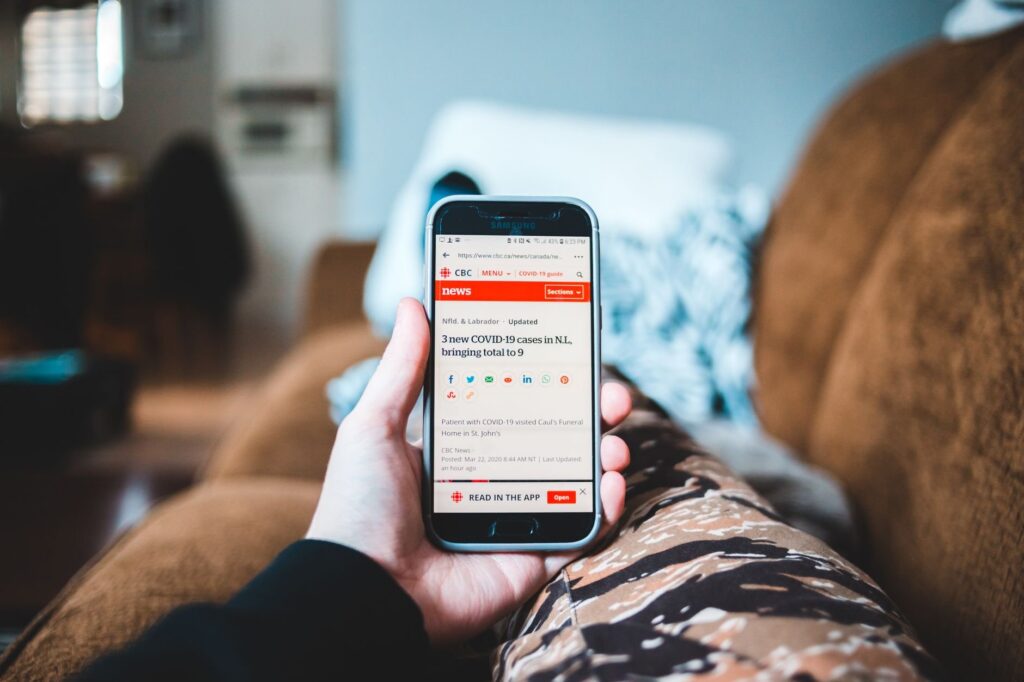
A news app headline on a phone screen: most celebrity stories reach readers this way, one headline at a time and stripped of the context around them. The headline shown is on another subject, so the image illustrates reading habits only.
Choosing how to read
Read for the verb. ‘Confirms’, ‘announces’ and ‘dies’ are claims about events. ‘Fuels speculation’ and ‘sparks rumours’ are claims about talk.
Read for the attribution. A quote with a name beats a paraphrase, and a paraphrase beats an unnamed insider.
Read the outlet’s role. A feed or aggregator points you to a story. It does not vouch for it. Follow the entry to the outlet that published it.
Where celebrity stories begin
Most celebrity stories start in one of a few places: an official announcement, an interview, a photograph or an unnamed insider. Each origin carries a different level of reliability, and the first job of any reader is to work out which one is behind the headline.
Official announcements and statements
Announcements come from the people or organisations who control the news: an artist, a studio, a representative, a venue or an event organiser. They are the strongest starting points because someone with authority put their name behind them. A headline like ‘Jay-Z to headline Super Bowl halftime show’ reports that kind of booking. The outlet’s version is a good pointer, but the announcement’s own date and wording belong to the original statement, so go to the artist’s or organisers’ channels when either matters.
The same applies to dates. A story that says an artist or studio ‘has announced’ something should be traceable to a dated post, release or press event. If you cannot find the original, the claim has not yet earned the word ‘announced’. Wire-service press releases and trade coverage are the usual places where those dated statements are recorded.
Photographs and sightings
Many stories begin with a picture: someone leaving a venue, arriving at an event, standing close to another public figure. Photographers wait for these moments outside venues, and the picture then gets a caption that supplies a meaning it cannot prove. The photograph shows that two people were in the same frame. The caption claims a relationship.
When you see a story built on a picture, separate what the image shows from what the headline says about it. For the working practices behind this kind of coverage, see how do paparazzi work.
A photographer aims a long lens from behind a hedge. Candid long-lens pictures show a moment from a distance, so the caption’s claim about what was happening needs separate support.
Unnamed insiders and blind items
Phrases such as ‘a source close to the star’ mark the weakest common origin. The insider may be a friend, a publicist, a rival or nobody at all, and the reader cannot tell which. Treat such a line as a lead that needs corroboration from someone on the record, not as evidence. The guide on what does a source close to the star mean goes through the wording in detail.
Blind items go further. They describe a celebrity without naming them and invite guessing. Guessing is the product. If you have never met the term, read what is a blind item, and keep in mind that an item nobody can be held to cannot be verified or corrected.
The celebrity’s own words
Some stories begin with the celebrity. When NBC News reports that Christina Applegate says she was misdiagnosed with multiple sclerosis, the claim is hers and the headline attributes it to her with the word ‘says’. That is the cleanest kind of origin there is, because the person with first-hand knowledge is speaking on the record. The right way to repeat it keeps the attribution. Say that she says it, and do not convert it into a general medical statement.
Photographers gathered shoulder to shoulder on a pavement. When a crowd shoots the same moment, many near-identical pictures appear with different captions, and the captions are where interpretation creeps in.
Talk shows and interviews
A talk show produces celebrity news by putting a person in front of a host and a camera, and what is said can be checked against the broadcast. That makes interviews a primary source for what the guest said, though not for whether it is true.
Talk-show moments also generate stories that have nothing to do with rumour. NBC News reports that Debbie Shields has spoken out about her viral moment riffing with Conan O’Brien. The story is about a clip travelling beyond its original audience, and the person in it explaining her side. This is a useful reminder that a viral moment and a verified account are separate things. The clip shows what happened on air, and the follow-up interview supplies her own account of it.
When a quote from an interview is circulating, apply two checks. First, find the recording or transcript and read the sentence in context, because a line pulled from a longer answer can mean the opposite of what the full answer meant. Second, check whether the quote is attached to the right programme and guest, since misattributed lines are among the most common errors. The guide to how to spot a fake celebrity quote covers the invented versions.
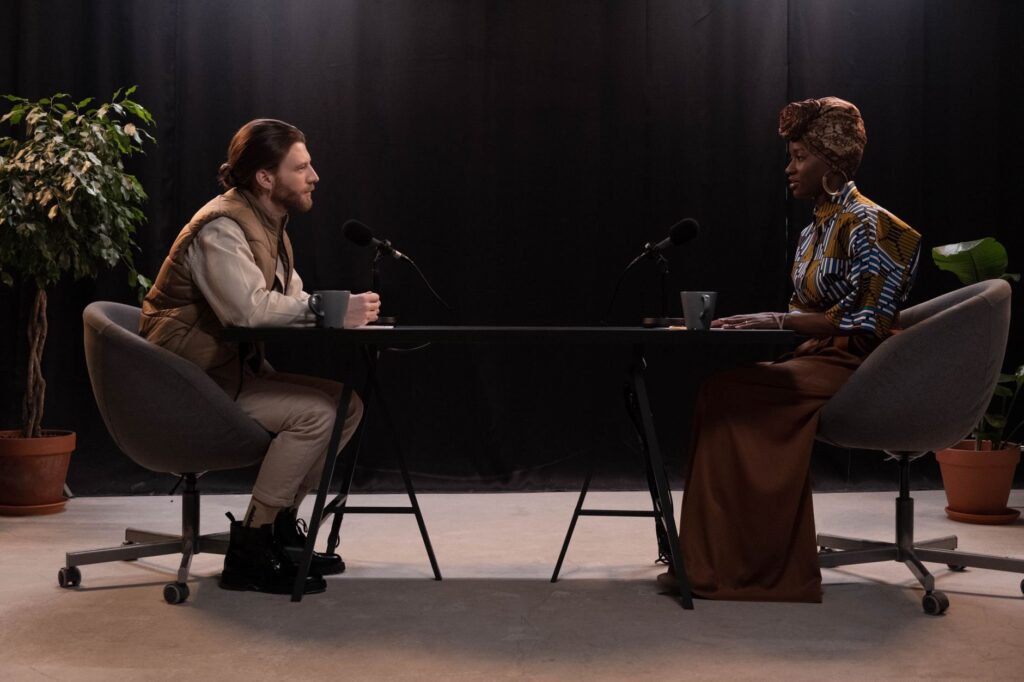
A host and guest face each other across a table with microphones between them. A recorded exchange like this is the original record of what the guest said, which clips and screenshots can only approximate.
Checking a rumor step by step
A rumour is true when a named party with direct knowledge confirms it, or when a verifiable record shows it. Everything else is a claim of varying strength. The routine below works on any celebrity story and takes a few minutes.
Name the claim. Reduce the headline to a single plain sentence: who did or is what. Strip out adjectives and questions. If the sentence turns out to be ‘people are talking about X’, you have gossip.
Find who is speaking. Is the claim made by the celebrity, a representative, a court, a company or an unnamed source? Move up this ladder as far as you can, because each step closer to the person with knowledge removes a layer of retelling.
Look for the primary statement. That means the post, release, filing, recording or transcript that the story is built on. If the story quotes it, the link should be there. If it describes it vaguely, search for it yourself.
Check for a second independent report. Several outlets repeating each other are one report. You need a separate outlet with its own sourcing, preferably an established entertainment trade publication or a wire service.
Look for later developments. Retractions, dismissals and corrections are published after the first wave of attention, and they are easy to miss.
Why later developments matter
Several of the NBC News headlines in the table are corrections to earlier moments. A woman who accused Jay-Z of rape has retracted the claim and, per the headline, says she ‘never met him’. Anyone who shared the original accusation has a stale claim in circulation. In another case, NBC News reports that Clavicular’s accuser dropped sexual assault claims from a civil lawsuit while a Massachusetts criminal rape case continues. That headline shows why a single word such as ‘lawsuit’ is not enough. The civil and criminal matters are separate and can move in different directions, so each statement needs its own check.
The Busfield headline teaches a related lesson. A judge tossing charges and citing prosecutor misconduct is a court outcome with a stated reason. It is not a verdict on any underlying allegation, and a careful reader repeats only what the report says. When allegations are serious, wait for a named, on-record outcome before drawing a conclusion, and avoid repeating anything that could be unfair if it proves wrong.
How a rumour travels
A claim gains force with each retelling because every repost removes some hedging and adds some confidence. By the third or fourth hand a ‘may be’ has become an ‘is’. Screenshots and short clips are especially prone to this, because they remove the sentence that qualified the claim. For a closer look at the pathways, read about how do celebrity rumors spread, and use the habit of tracing a post back to its first appearance before you repost it.
Casting, music and announcement rumors
Casting and booking rumours are easier to test than relationship gossip because they end in a public announcement. That endpoint gives you a measurable outcome, and it gives you something to hold sources to.
Treat the announcement as the benchmark
Film and music rumours claim that a person will appear in a project or perform at an event. Until the studio, artist or organiser says so, the claim is a prediction. When the statement arrives, record its date and compare it with the earlier rumour. If you do this over a period, you build a picture of which sources are early and right, early and wrong, or simply repeating what others said.
That date-keeping is the most useful habit in casting coverage. A report that appears just before an official announcement may have been tipped by the studio, or may have been a lucky guess, and the two are not the same. Only a record of earlier claims against later confirmations can tell you which. The guide on are movie casting rumors reliable applies this approach to film, and the one on reliable comic book movie scoopers looks at named reporters and their records.
An audience faces a lit stage with performers. Live-event bookings are among the rumours that end in a verifiable announcement, which is what makes them testable.
Music and event headlines
Headliner and tour rumours follow the same logic. The Jay-Z halftime headline is a good example of a story that is concrete and checkable. A reader who wants the real date can go to the original announcement, while a reader who saw only a repost has no way to know whether the claim was current. Always ask where the date comes from, and prefer the statement’s own timestamp over the date a page was shared.
Speculation about television casting or format works differently. The NewsNow line about Maya Jama and Celebrity Traitors is an item of viewer interpretation. It describes a reaction to something broadcast. You can check what was broadcast, but you cannot check what viewers read into it.
When to wait
Wait when the only source is anonymous. A prediction with no named speaker is not yet worth planning around, whether you are a fan or a writer.
Act on the statement, not the scoop. If a booking affects your plans, such as tickets or travel, rely on the organiser’s own announcement.
Treat a track record as a pattern. A source that has been right before is a reason to look closely, and it does not guarantee the next claim.
Fakes, hoaxes and clickbait
Fabrication is a separate problem from error. A fake quote, a faked photograph or a death hoax is built to travel, and it often borrows the look of a real report. The checks differ slightly for each, but the principle is the same: go back to the original.
Death reports
Few stories spread faster than a death. A genuine report looks like the Walter Koenig headline on NBC News, which says that the actor who played Chekov on the original Star Trek series has died at 90. It names the person, states the fact and gives the age. A hoax often relies on vague wording, a screenshot without a link or a page nobody recognises. Before sharing, look for the same news from an established outlet and from the family, a representative or another official voice. The dedicated guide to how to check if a celebrity death is a hoax goes through this in more detail.
Photographs and images
An image can be real and still misleading, if the caption misstates when or where it was taken. It can also be wholly generated or edited. Ask where a picture first appeared, whether a photographer or agency is credited and whether other angles of the same moment exist. The guide on how to tell if a celebrity photo is fake collects the practical checks.
Headlines built to be clicked
Clickbait headlines withhold the one fact that would let you decide whether to read: a name, an outcome, a verb. They lean on phrases such as ‘you won’t believe’ or on questions the article itself never answers. Compare the headline with the first paragraph. If the headline asks whether a star has done something and the article never says, the question was the product. A few reliable markers appear in the guide on how to spot clickbait celebrity headlines.
Plain news headlines, by contrast, give you the answer in the headline. The NBC News examples above all do. They tell you who, what happened and, often, why, which is the opposite of a teaser.
Judging sources and track records
A source earns trust through a visible record of being right, correcting mistakes and naming its sources. Measure each outlet by how its past claims turned out, and let brand recognition count for little.
Building your own scorecard
Keep a simple habit: when a story makes a specific prediction, note it, then note what happened. Over time, patterns show up. Some outlets are strong on one beat, such as film casting, and weak on relationships. Some sit on the fence until the announcement comes and then claim they knew. Judging by the pattern is fairer than judging by a single hit or miss. Questions about the category as a whole are taken up in the guide to are celebrity gossip sites reliable.
Learn from both outcomes
Rumours that proved right and rumours that proved wrong are equally instructive. Looking at celebrity rumors that turned out to be true tends to show that true ones had a traceable origin, such as a named party or a record. Looking at celebrity rumors that were false tends to show missing attribution, recycled claims and details that nobody could confirm. Studying both teaches you what to look for before the answer is known.
A quick decision guide
Share with attribution. The celebrity or a named representative said it, and you can link the statement.
Hold and watch. An established outlet reports it with named sourcing but the party involved has not responded.
Skip it. The claim relies on an unnamed insider, a screenshot with no origin or a headline that withholds its own answer.
Correct or remove. You shared something that has since been retracted or dismissed. Update the post and say what changed.
Frequently asked questions
Is one news headline enough to confirm a death?
A plain report from an established outlet is a strong lead, as with the NBC News report on Walter Koenig. For anything you plan to repeat, look also for the family’s or representative’s own statement.
If an accuser retracts, was the original claim false?
A retraction means the claim has been withdrawn. In the Jay-Z case NBC News reports the accuser said she ‘never met him’. Report what was said and when, and avoid adding conclusions the headline does not state.
What counts as a primary statement in celebrity news?
It is the original record: a post by the person, a release from their representatives or a studio, a recorded interview or a court action. A news story about any of these is a secondary account of it.
Is it fine to share a rumour if I call it unconfirmed?
Labelling helps, but sharing still gives the claim reach. If the rumour accuses someone of wrongdoing or reports a death, wait for a named, on-record source before posting.
What does a source close to the star mean? It means the outlet is relaying information from an unnamed person it describes as near the celebrity, so readers cannot check who spoke, how close they were or what they stand to gain.
An unnamed source leaves a reader to weigh a claim on its wording alone. The decision is less about whether the claim sounds plausible and more about how much the label actually tells you.
The speaker is hidden. You cannot look up the person’s role, history or track record, so the usual test of whether someone is in a position to know is unavailable.
Closeness is undefined. “Close to the star” and “insider” describe a relationship without naming a job, a date or a vantage point. The phrase does not separate a witness from someone repeating what they heard.
Motive is invisible. Ethics codes are described as guides through difficulties such as conflicts of interest. With a named person you can ask who benefits. With an unnamed one you cannot.
The count of witnesses is unknown. The standards summarised above distinguish a single eyewitness, whose account is reported with attribution, from two or more independent eyewitnesses, whose account may be reported as fact. An anonymous label does not reveal which situation applies.
In practice, treat a claim resting on one unnamed voice as an allegation, however confidently it is written. The next section looks at the phrases themselves.
Reading the common phrases
Attribution is the practice of telling readers where information came from. Anonymous attribution does this in a way that withholds the name, and the vocabulary used varies by outlet.
“A source close to the star”
This wording points toward a person near the celebrity without saying how near. It can sit comfortably beside a quote, which makes the quote feel firsthand even when the label does not establish that. A useful habit is to ask what the phrase would have to mean for the claim to be reliable, and then notice that the text never confirms it.
“An insider”
“Insider” is shorter and sounds more authoritative, yet it carries the same gaps: no role, no vantage point, no way to tell a single voice from several. A stronger-sounding label is not stronger evidence. Compare labels by what they let you check, not by how confident they sound.
Named versus unnamed attribution
A named person can be asked, contradicted or held to account. An unnamed one cannot, which is why the same sentence reads differently when the speaker is identified. When a story gives both kinds of attribution, give more weight to the named material and treat the anonymous part as the weaker support.
Why outlets use anonymous sources
Outlets use anonymous sources because some people will share information only if they are not named, and because journalism ethics asks reporters to weigh the harm that gathering and reporting can cause. The standards summarised here tell journalists to recognize that gathering and reporting information may cause harm or discomfort. Withholding a name is one way an outlet can act on that concern.
A notebook, phone and microphone on a table capture how a conversation with a source is recorded, though the reader sees only the summary.
Entertainment journalism sits inside the same framework as other reporting. The summary describes journalism ethics as principles of ethics and good practice for professional journalists. Reporters are expected to be as accurate as possible given the time allotted, and to seek reliable sources.
A notepad clipped to a board and a phone held to the ear show the basic mechanics of a source interview, which readers of the finished story never see.
The practical lesson is that anonymity is a trade. The outlet gets information it might not otherwise have, and the reader gives up the ability to judge the speaker. Anonymity is easier to accept when a story shows the effort behind it, such as multiple accounts or corroborating detail, and harder to accept when the unnamed person is the only support.
How tabloids get celebrity stories
A tabloid can build a story from several inputs: a named interview, a photograph, an eyewitness account or an anonymous tip. Each input has a different reliability profile. An eyewitness who is quoted by name is easier to weigh than a “source” described only by closeness to the star.
Photographers gathering on a sidewalk illustrate a route to a story that does not depend on anyone speaking, so a photo-led item and a source-led item should be read differently.
This matters for decoding wording. When a tabloid story is built around a picture, the picture can show what happened but not why. When it is built around an unnamed source, the words carry the whole claim. The explanation of motive or meaning that appears alongside a photograph is often where an anonymous voice enters. For the broader process, read how does celebrity gossip work.
A line of photographers in daylight, with pedestrians passing behind, shows how public the coverage of well-known people can be compared with the private sourcing behind many written claims.
Public figures, publicists and privacy
Public figures have fewer privacy rights than private persons in US law, according to the ethics summary. The same text recognizes that private people have a greater right to control information about themselves than public officials do. The effect is that coverage of celebrities faces fewer legal brakes than coverage of ordinary people, so the burden of judgement shifts toward the reader.
A publicist is a person whose job involves a star’s public image, and that is a reason to ask who the unnamed voice might be. A source could be a friend, a colleague or someone with an interest in how the story lands. Because ethics codes flag conflicts of interest as a recurring difficulty, a claim that happens to flatter or damage someone is worth a second look. The label alone will never tell you which it is.
Judging a claim that relies on an unnamed source
Judge an anonymous claim by what the text lets you test, not by how insider-sounding it is. These checks fit the wording itself, without needing to investigate the outlet.
Look for the count. Wording that points to separate, independent accounts is closer to the standard for reporting something as fact. A single voice, however labelled, is closer to the standard for reporting with attribution.
Check for a vantage point. If the story says what the person saw or heard directly, the claim is stronger than if it only gives their closeness to the star.
Notice who gains. A claim that serves an obvious interest deserves more caution, since conflicts of interest are a standing concern in ethics codes.
Separate fact from characterization. A named, checkable detail is stronger than an unnamed person’s description of someone’s feelings or intentions.
Wait for confirmation. If nothing named appears, treat the claim as unconfirmed and hold off on repeating it as fact.
These checks suit casual readers who want a quick filter. They do not replace the question of outlet reliability, which is a separate decision covered elsewhere on the site.
Frequently asked questions
What is an unnamed source in entertainment news?
An unnamed source is a person whose information appears in a story without their name attached. The outlet describes them in general terms, such as “insider” or “source close to the star”, and the reader cannot identify or contact them.
Is an unnamed source the same as an invented one?
No. The label itself does not show whether a person exists or spoke accurately. It only means the reader cannot check, so the wording should be weighed as a claim rather than treated as either proven or fabricated.
Does “insider” carry more weight than “source close to the star”?
Neither phrase names a role, a date or a vantage point, so neither is stronger evidence. One may sound more confident, but confidence in wording is not a measure of reliability.
How should a poll or percentage in a celebrity story be read?
The ethics standards say survey and statistical information deserve special treatment: conclusions should be communicated in precise terms, with estimated error and methodological flaws stated. A figure given without that context deserves caution.