How do paparazzi work? They follow celebrities persistently, shoot full-figure frames from a distance with fast telephoto lenses, and pass the best images to an agency that sells them to publications. The photo alone rarely proves how a meeting came about.
This guide traces one image from capture to published story, and it is background for judging celebrity gossip built on candid pictures.
Paparazzi versus celebrity photographers
Paparazzi are defined by persistence. A practitioner account on Photography Bay separates them from celebrity photographers by how they behave: paparazzi constantly follow celebrities and intrude on their private lives, while celebrity photographers prefer to wait for the target to come out in public, snap the photos and leave.
The distinction matters when judging a picture. A red-carpet shot belongs to the second group, because the appearance was public and expected. A frame of someone walking down a street or leaving a building usually belongs to the first, because the photographer chose to follow rather than wait for an invitation.
The same account describes the job as slow and often dull. It refers to hours upon hours of waiting and watching that can become frustrating before a brief opportunity appears. A candid image therefore tends to be the product of long, deliberate effort rather than a lucky glimpse. Whether that effort ended in a chance encounter or a known location is something the image does not reveal.
The photographer also manages visibility. The same account describes keeping the camera concealed in a bag until the right moment arrives. The result is that most of the working day produces nothing, and the saleable frames come in a short burst.
Equipment and positioning
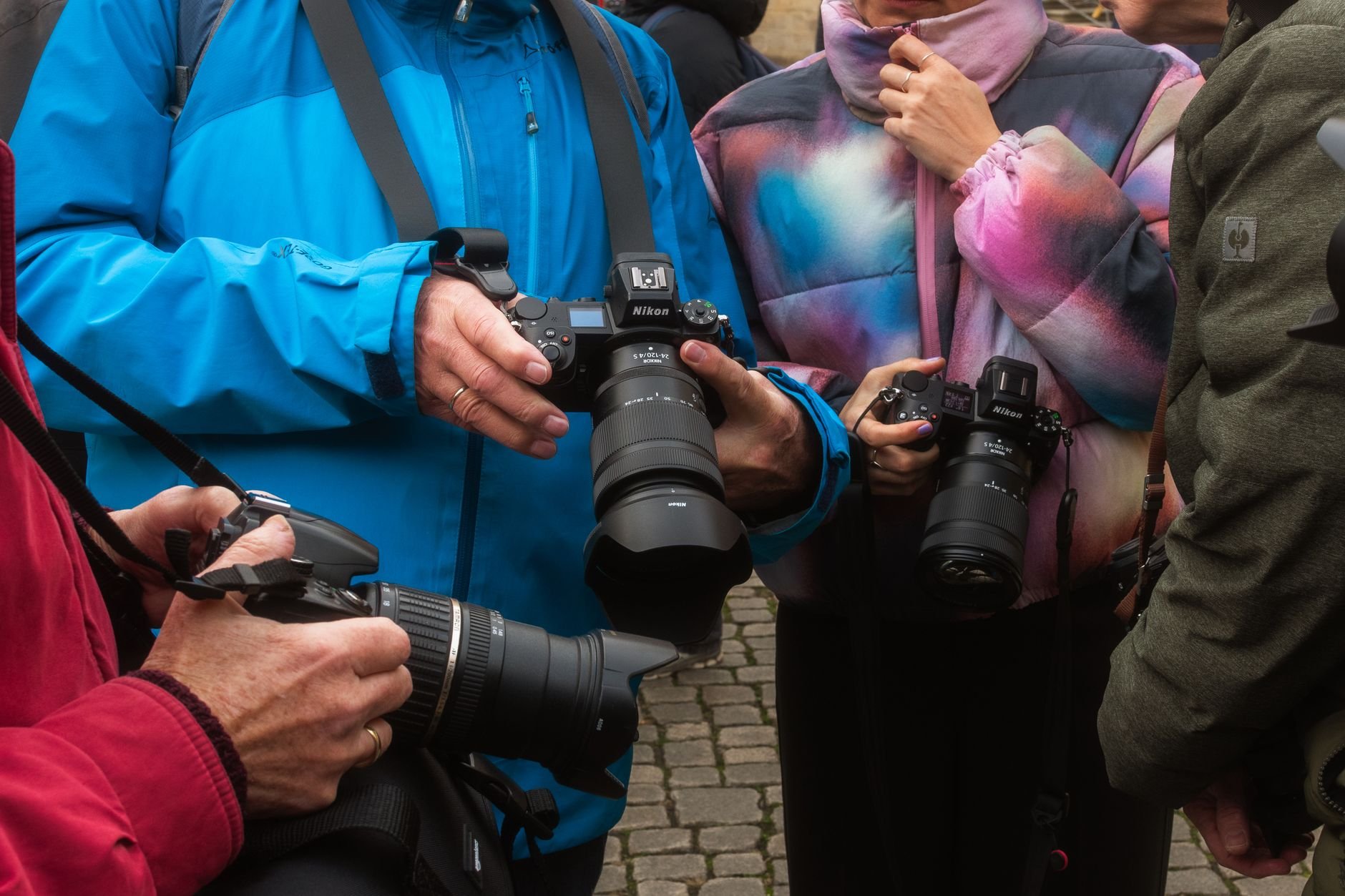
Equipment is built around reach and speed. A Picture Correct guide to news and paparazzi work says a kit needs to cover 28mm to 200mm with two fast zooms, and defines fast as large-aperture f/2.8 lenses. For long-distance work it points to a 300mm lens with a doubler.
It also notes that a full-frame sensor is, for all intents and purposes, the same size as a 35mm film frame. That is the format the lens advice assumes. A fast, long lens lets a photographer stay back from the subject, which suits shooting from a vehicle or across a street.
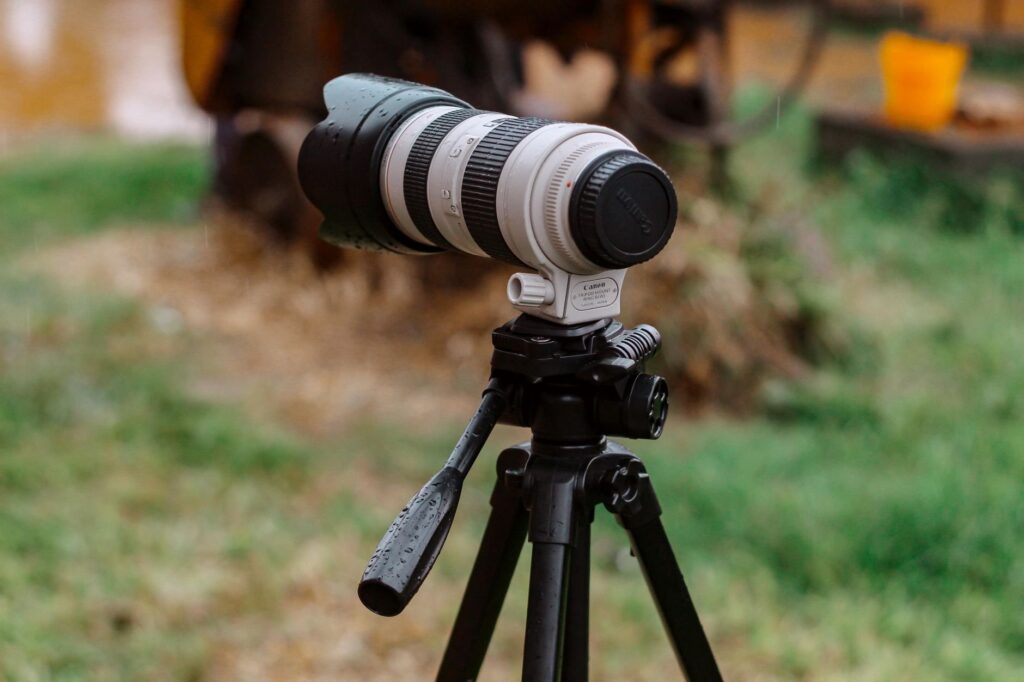
A telephoto zoom with a lens hood on a tripod. Long lenses of this kind are what allow a photographer to frame a subject from across a street rather than at arm’s length.
Not everyone has that glass. The Photography Bay account says that without the required telephoto lens, a photographer must do everything possible to get in close. Distance therefore separates two working styles: long lenses mean the photographer can stay far away, while short lenses force proximity and more confrontation.
What makes a frame sellable
The same account gives blunt rules for frames that will sell. All photos need to be taken from in front of the celebrity, and side profiles will not sell. It also advises shooting vertical, never horizontal, with the full figure from head to toe.
These rules explain why published candid photos look alike. Many show a person facing the camera, walking, in a tall frame that fits a magazine page. The look comes from what buyers want, which is worth remembering: a picture is selected and shaped by market demand as much as by what happened.
From capture to agency desk
After the shoot, images move to a photo agency. The agency sits between photographer and publication, and it also guides the shoot itself. The Photography Bay account records agency advice to follow the subject to the next location and keep shooting, because more frames and more locations give editors more to choose from.
Agency selection is the stage where a long day shrinks to a few usable images. A photographer may shoot many frames, but the picture desk looks for the ones that match the buyer’s needs: a recognisable face, a clear frame, a vertical full figure. Editors then offer those images to outlets.
A general office scene of one person reviewing a grid of portraits on a monitor, illustrating the selection step at which many frames are narrowed to a few. It does not show a real agency desk.
Volume of output can be small. The Picture Correct account describes a session in which about five frames were shot, and those pictures were in every UK national newspaper the next day. Reach, in other words, does not depend on how many pictures were taken. A handful of strong frames can travel through the whole press within a day.
How a photo becomes a story
A published paparazzi photo is only the starting point of a story. The picture supplies a place, a time and a facial expression, and the outlet supplies the narrative. Because the frames are often silent about context, a caption or headline can imply a mood, a relationship or a conflict that the image does not establish.
That gap is where gossip grows. A single full-figure frame of someone looking away or walking quickly can be described as upset, secretive or rushed. The same frame could equally show an ordinary moment. Treat the caption as a claim and the photo as evidence only of who was where, roughly when.
An open magazine with large photographs across the pages. Layout gives pictures a prominent place, and the text beside them is where a story is attached to the image.
Questions to ask of a candid photo
Was the setting public? A street or event is consistent with the public-place accounts below, while a private setting raises a different question.
Does the caption claim more than the frame shows? Look for mood, motive or relationship being asserted from a single image.
Is the shot the standard saleable type? A vertical, front-facing, head-to-toe frame reflects buyer demand, not necessarily anything unusual about the moment.
Does a second independent source back the story? The step-by-step method in how to tell if a celebrity rumor is true applies directly to stories built on photographs.
Staged tip-offs and what a photo cannot prove
Persistent following does not exclude cooperation. A photograph taken in public with a subject facing the lens is consistent with a chance encounter, a long stakeout or an arranged appearance, and nothing in the frame separates them. That is a reason for caution rather than a verdict on any particular picture.
The practical rule is to rely on what a photo can show and to be wary of what a caption adds. Where a story rests on an unnamed insider, compare it with the kind of anonymous claim explained in what is a blind item. Both formats ask readers to accept a framing they cannot check for themselves.
Legal limits on paparazzi
Legal limits depend on place, and the supplied accounts describe practice rather than statute. The Photography Bay account says shooting is acceptable as long as the photographer is not blocking the subject and is not on private property. The same writer describes the photography as totally legal in the public streets of New York City.
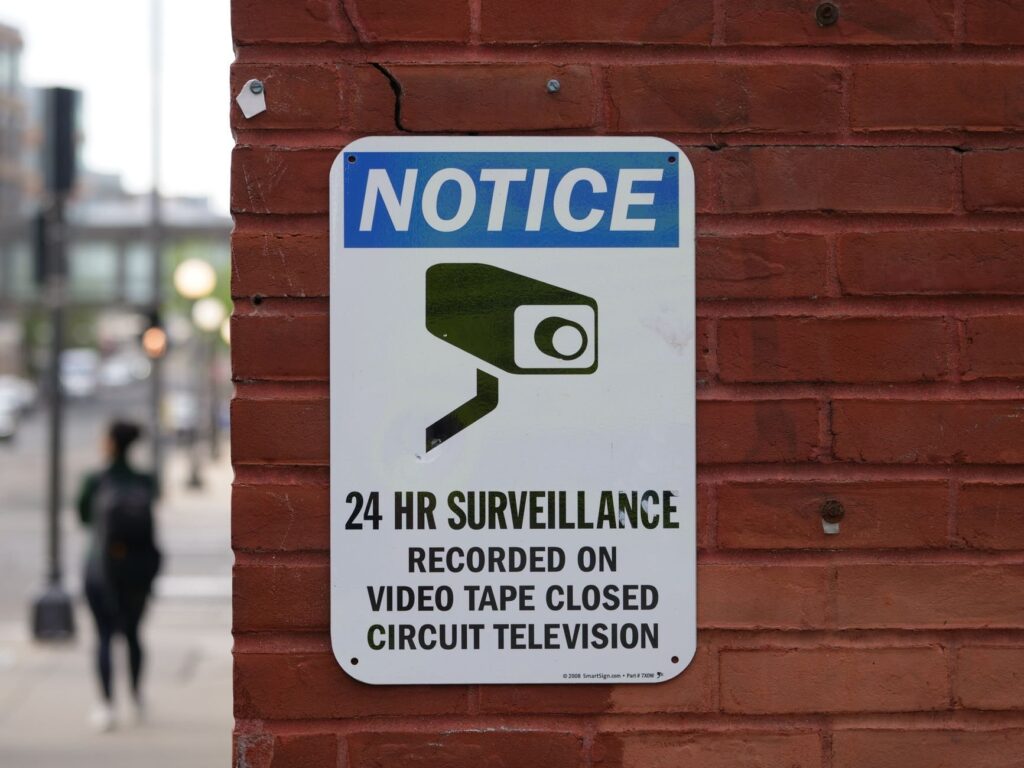
A recording notice on a brick wall, shown only as a general illustration of signage about filming in public. It is not evidence of any specific paparazzi law.
Two conditions stand out in that account. Blocking a person and entering private property are the lines it treats as limiting a shoot. These are a practitioner’s working rules and a report of one city, so they should not be read as a legal summary of every jurisdiction. Anyone who needs to know what applies in a specific country or state should check its statutes or a legal summary.
For readers judging a story, the legal question and the ethical question are separate. A photo can be lawfully taken in a public street and still be used to push an unfair caption. Legality says how the picture was gathered; it says nothing about whether the story attached to it is accurate.
Frequently asked questions
How do paparazzi work day to day?
They follow targets, wait for hours, keep the camera out of sight until the moment arrives, and then shoot quickly. Frames go to an agency that selects and offers the best to publications.
How do paparazzi photos become stories?
An agency selects the frames that match buyer needs, such as vertical full-figure shots facing the camera, and outlets add captions and text. The picture shows who was where; the narrative comes from the outlet.
What laws limit paparazzi?
One practitioner account says shooting is acceptable if the photographer is not blocking the subject and is not on private property, and calls street photography in New York City totally legal. Rules differ by jurisdiction, so check local statutes.
How much do paparazzi photos sell for?
A single fixed price cannot be quoted. One account describes about five frames reaching every UK national newspaper the next day, which shows that a few strong images can travel widely.
Do celebrities tip off paparazzi?
A candid photo cannot show whether a meeting was arranged, because a stakeout and a tip-off can produce the same frame. Treat the caption’s claims separately from the image.
What is a blind item? It is a piece of gossip that shares juicy details without naming anyone, leaving readers to piece together clues about who is meant. The catch is that the reader usually cannot verify it.
The format is one small corner of celebrity gossip, and it works best when you understand its construction before you start guessing. The sections below cover how an item is built, where it appears, who gains from it and how to read one sensibly.
The format in plain terms
A blind item is gossip with the name taken out. One podcast on the subject puts it as dishing out all the juicy details without naming names, and compares it to a tantalizing piece of gossip you would find in a tabloid. The detail is on the page. The identity is not.
The handwriting is visible but too small and blurred to read at this size.
That missing name is the whole product. An ordinary gossip story gives the reader a claim and a person to attach it to. A blind item gives the claim and withholds the person, which turns reading into a small puzzle. As the same podcast describes it, the item leaves it up to the audience to piece together the clues.
This is why the term shows up wherever gossip does. A tabloid is a publication built around this kind of material, a gossip column is a regular feature that carries it, and a blind item is the anonymous short form that can sit inside either. The entry point is the same everywhere: a story about someone, minus the someone.
How a blind item is built
Most blind items follow the same internal logic, even when the subject matter changes. Reading them as constructed pieces, rather than as reports, makes the pattern easy to see.
Start with a scandalous scenario. The hook is the juicy detail. LaineyGossip describes its blind item series as covering cheaters, affairs, love triangles, studio drama, power struggles and other juicy smut, which gives a fair picture of the usual raw material.
Remove the name. The writer replaces the person with a description, such as a type of star or a role. The reader is told that someone is involved, but not who.
Leave clues in the description. The remaining details act as handles. These are what readers are meant to use when they work out who is meant.
Close with a question. Many items end by handing the puzzle to the audience. One example on the blog Crasstalk finishes by asking Who is Mr. Dress-up?, which invites readers to name the unnamed star.
The sequence explains why the format feels interactive. The writer supplies a story, takes away its subject and then asks the reader to finish the job. Finishing the job is a guess, not a confirmation.
Where blind items appear
The format has moved between print, websites and games without changing its basic shape. Each home adds a slightly different twist on the guessing.
Gossip columns and tabloids
The tabloid comparison is the simplest way to place the format. A short anonymous item fits naturally into a regular column, where readers expect a quick piece of talk rather than a full report. The compact length suits it, because there is little room for anything beyond the hook, the clues and the question.
A printed newspaper page: columns of small text like these are the kind of space a short anonymous item has to fit into.
Gossip websites
Online, the same idea becomes a recurring series. LaineyGossip files its anonymous items under a Blind Riddles tag, which shows how a gossip site can turn the format into a regular feature rather than an occasional aside. A series gives readers a reason to come back, since each new riddle is another puzzle.
Reading on a laptop or phone also changes how people respond. Readers can compare guesses with others, which makes a clueless-looking item feel like a shared mystery. A guess that many people repeat can start to feel like an answer, even though repetition adds no evidence.
Online reading puts a grid of items one click apart, so a single anonymous story competes with many others for attention.
Guessing games
The format has also been borrowed as a game. BuzzFeed uses the label for a pop culture guessing game where players try to name a movie, a show or a celebrity from clues. You can keep revealing clues, but you lose points.
The game version is useful because it makes the mechanism explicit. The fewer clues you need, the better you score, and the answer is checked by the game itself. A gossip item offers the same puzzle but no scoring system, so a guess is never marked right or wrong.
Who benefits and why readers cannot verify
The format is built so that the publisher gets the attention of a story while leaving the subject unnamed. Readers get a puzzle to chew on, and the item gets talked about because the name is open to debate. Those benefits come from the structure itself, not from any particular rumor being true.
Verification is where the format is weakest. A claim about an unnamed person has no fixed target, so there is nothing a reader can check it against. Even if a guess seems to fit every clue, the clues were chosen by the writer, and a good fit shows only that the description is flexible enough to match.
That is the central point for anyone reading one. A blind item can be entertaining as a puzzle, but the puzzle itself is the product. Its entertainment value does not depend on whether the story is accurate, and nothing in the format asks the writer to prove it.
Reading a blind item sensibly
Treat an item as a puzzle first and a claim second. A few habits keep the guessing fun without confusing a clue-fit with a fact.
Separate the puzzle from the claim. Working out who an item could be is a game. Believing the underlying story is a different step, and the format gives you no help taking it.
Be wary of confident guesses. A name that many readers agree on has not been confirmed by agreement. Hold a guess loosely and do not repeat it as if it were established.
Watch the framing. The closing question, the teaser and the promise of juicy details are designed to pull you in. The same techniques show up in how to spot clickbait celebrity headlines, and the habits for resisting them carry across.
Remember how stories reach the page. Gossip often travels alongside photographs and tip-offs, which is the territory of how do paparazzi work. An anonymous item has no picture and no named source to weigh.
If you enjoy the format, enjoy it as a game. If an item makes you want to act on it, share it or form a view of a real person, that is the moment to stop, because the format cannot support any of those steps.
Frequently asked questions
Does a blind item always name nobody?
It leaves the person unnamed, which is the defining feature. The reader is expected to piece together the clues, so the details are on the page while the identity is withheld.
Is a blind item the same as a tabloid story?
No. A tabloid is a publication, and a blind item is a kind of gossip it can carry. One podcast compares the format to tabloid gossip with the names left out.
What kinds of stories do blind items usually cover?
LaineyGossip describes its series as covering cheaters, affairs, love triangles, studio drama and power struggles. That mix of scandal and workplace intrigue is typical of the format.
Why do blind items often end with a question?
The closing question hands the puzzle to the reader. An item on Crasstalk, for example, ends by asking who the unnamed star is, which turns a story into a guessing prompt.
Can a blind item be proved or disproved?
Not from the item alone. With no name attached, there is nothing fixed to check, and a guess that fits the clues shows only that the description was open enough to match.
Are celebrity gossip sites reliable? Story by story, not outlet by outlet: reports tied to court documents or an on-record official hold up best, while stories resting on unnamed sources need corroboration before anyone repeats them.
This breakdown sits inside wider coverage of celebrity gossip. Readers who want a step-by-step routine for a single claim can pair it with the guide on how to tell if a celebrity rumor is true. The sections below are grouped by the situation a reader is in, because the same outlet can be very solid on one story and thin on the next.
Stories built on legal records
When a gossip report points to a court filing or a prosecutor’s statement, the reader can trust it far more than a story with no named basis. The trust attaches to the document, though, not to the outlet’s gloss on it. TMZ is the named gossip outlet in this breakdown, and its reports show both sides of that distinction.
Divorce filings
TMZ’s report on the Dean Norris divorce opens its sourcing with the filing itself. According to the report, court documents obtained by TMZ show Dean’s wife, Bridget, filed for divorce in Riverside County. That is a checkable claim: a filing exists, in a named county, submitted by a named person.
The same report is also candid about what the paperwork does not contain. TMZ notes that the court records do not reveal the reason for the split or what custody arrangements might follow. A reader should keep that limit in mind. A filing proves that a divorce case was opened. It does not explain why, and any headline or social post that supplies a reason has moved beyond the document.
This approach suits readers who only want to know whether an event happened. It suits them less if they want motives, because motives are exactly what the records left out.
Criminal charges
In a criminal-charge report, TMZ states that the Kern County District Attorney confirmed the charges to TMZ. An on-record confirmation from a prosecutor’s office is the strongest type of sourcing a gossip outlet can offer, because the office responsible for the case is the one speaking.
The condition is scope. The confirmation covers the charges, and nothing more. Claims about circumstances, motive or guilt in the same article need their own basis. A charge is an accusation, so a careful reader repeats it as a charge and not as a finding.
Repeat with confidence: that a filing was made, in which county, and by whom, when a document or official is named.
Repeat with a caveat: reasons, custody outcomes and backstory the filing does not state.
Do not repeat as fact: anything the article attributes to nobody.
Stories built on anonymous sources
Anonymous sourcing is where gossip reliability is hardest to judge, because the reader cannot check the person speaking. It does not make a story false, but it changes how much weight the story can carry.
Unnamed production sources
TMZ’s report on Zac Affleck filming opens with the line that production sources tell TMZ. The attribution at least places the sources in a particular setting, the production, which is more informative than a bare claim. It still gives the reader no individual to hold accountable.
The practical reading is to treat a report like this as provisional. It is useful as a prompt to look for an announcement from the production or a matching report from a second, independent outlet. It is a poor basis for sharing as settled news.
Vague sourcing phrases
Phrases such as a source close to the star carry even less than a named setting such as a production. They can describe a friend, a publicist or a person with a grudge, and the wording rarely tells the reader which. A separate explainer unpacks what does a source close to the star mean and how much weight each variant deserves.
For decision-making, a simple rule works: the vaguer the attribution, the more a second confirmation matters. Specific attributions (a court, a district attorney, a named production) give the reader something to verify. Generic ones give nothing to verify.
Judging whether an outlet corrects itself
A corrections practice is one of the clearest trust signals, because it shows an outlet will admit error in public. The evidence in this breakdown for what a good correction looks like comes from The Guardian, a general news outlet and not a gossip site, so it works as a benchmark and not as a claim about any tabloid.
A publishing editor with a title field, an Add Media button and a Paragraph dropdown. It shows how online stories are drafted and says nothing about any outlet’s standards.
A benchmark correction
The Guardian’s correction dated 13 September 2020 addressed an article published on 8 September. The article had incorrectly attributed to the UN general assembly a warning to governments. The correction states that the quoted comment was in fact made by the Global Policy Forum.
Three features make this a useful model. It is dated. It identifies the original article by its date. And it names both the error and the right source, so a reader knows exactly what changed. A vague line saying an earlier version contained inaccuracies would not do the same job.
Red handwritten marks on a page. The image illustrates editing and correction in general and does not show any outlet’s process.
What to look for in a gossip outlet
Apply the same test to any gossip site or tabloid. Look for a visible corrections page or an on-article note, and check whether entries are dated, tied to a specific earlier story and clear about what was wrong. An outlet whose pages show no such notes gives the reader no evidence of how it handles mistakes, and that is a reason for extra caution, not a verdict.
A reader cannot assume a corrections practice exists because an outlet is large or famous. It has to be visible on the outlet’s own pages. If it is not, rely on stories whose basis is documented and independently checkable.
An open glossy magazine, with illegible text, illustrating print gossip in general. It does not identify any title or outlet.
Tabloids and gossip sites as a category
Reliability is not a property of the whole category. The evidence points to a story-level test, and that test applies equally to a website, a supermarket tabloid or a social-media account that repackages both.
How accurate is the category?
No evidence here supports a blanket ranking of outlets, and a precise accuracy percentage for TMZ or for tabloids generally would be invented. What the supplied reports do show is a pattern in TMZ’s sourcing: a document, an on-record official or a labelled anonymous source, with its own caveats stated. That pattern is a reason to read a TMZ story on its stated basis, not to accept or dismiss the outlet wholesale.
A phone beside loose paper: a neutral stand-in for checking a headline against the filing it cites. The screen is blank, so no site is shown.
Choosing which outlet to trust
The criteria below separate a more trustworthy outlet from a less trustworthy one, in order of how much they should change a decision.
Named basis: prefer a story that cites a court filing, a prosecutor or another identifiable party over one that cites nobody.
Stated limits: prefer an outlet that says what its documents do not show, as TMZ did about the divorce filing’s missing reasons.
Visible corrections: prefer an outlet whose corrections are dated, specific and attached to the original story.
Scaled caution for anonymity: wait for corroboration when a story rests on unnamed sources, however confident its tone.
These criteria suit casual readers who want a quick filter, and they suit anyone about to share a claim. They do not suit someone who needs certainty about a private matter, since no outlet’s sourcing can supply that where records are silent.
Frequently asked questions
Question
Answer
Are celebrity gossip sites generally accurate?
Accuracy varies by story. Claims tied to court documents or an official’s confirmation are the most dependable, while claims from unnamed sources are weaker and need a second confirmation.
How accurate is TMZ compared with other outlets?
No measured comparison backs a ranking. The supplied TMZ reports cite court documents, a district attorney’s confirmation and, in one case, unnamed production sources, so each story should be judged by its own stated basis.
What makes one gossip outlet more trustworthy than another?
Named, checkable sourcing, honest statements of what a record does not show and a visible, dated corrections practice. Anonymous attribution lowers confidence unless it is corroborated.
Do gossip sites publish corrections?
Some outlets publish clear corrections, and The Guardian’s dated notice naming the Global Policy Forum as the true source of a quote shows the standard. For any gossip site, look for a comparable dated, specific correction on its own pages.
Celebrity gossip is unconfirmed talk about public figures. It becomes news only when a named person or organisation says it on the record, so judge every item by who is speaking and how they know.
The sections below separate gossip from entertainment news, show where stories begin and give a repeatable checking routine. Readers who want a compact checklist can go straight to how to tell if a celebrity rumor is true.
Gossip and entertainment news: where the line sits
Entertainment news reports things a named source has confirmed or that can be checked. Gossip passes along things people are saying. The two sit side by side on the same pages, in the same fonts, which is why readers confuse them.
What each one does
An entertainment news story answers a question that has an on-record answer: who was booked, who said what in an interview, what a court did, who died. The NBC News examples in the table show the pattern. A headline such as the one about a judge tossing charges names the actor, the action and the reason the judge gave. Every part of it can be checked against the court’s own record.
A gossip item works the other way round. It starts with a mood or a claim, such as a flirtation, a feud or a secret relationship, and then looks for something to attach it to. The NewsNow line about a ‘flirtation’ on Celebrity Traitors fuelling speculation is a good specimen. The word ‘speculation’ is the signal. Nobody involved has said anything, and the story is about the audience’s reaction.
The practical test is simple. Ask whether the headline’s main verb is something a named person did or said, or something other people suspect, claim or wonder. The first kind of verb belongs to news. The second kind belongs to gossip, however polished the page looks. A fuller account of the mechanics is in the guide to how does celebrity gossip work.
Where magazines and aggregators fit
Entertainment journalism is a wide field. The Harper’s Bazaar celebrity section, for example, is organised around red carpet, relationships and event coverage. That is a mix of things a reader can verify (an event happened, an outfit was worn) and things that depend on interpretation (a relationship read from a photograph). The section itself does not tell you which is which. You have to read each item for its sourcing.
Aggregators add another layer. The NewsNow celebrity feed groups items into Top Stories, Latest News and Most Read, and each entry shows the name of the originating outlet and a timestamp. That layout is useful because it shows who published a claim first. It also shows that prominence on a feed reflects reading and recency, not accuracy. A Most Read slot tells you what people clicked, and nothing more.
A news app headline on a phone screen: most celebrity stories reach readers this way, one headline at a time and stripped of the context around them. The headline shown is on another subject, so the image illustrates reading habits only.
Choosing how to read
Read for the verb. ‘Confirms’, ‘announces’ and ‘dies’ are claims about events. ‘Fuels speculation’ and ‘sparks rumours’ are claims about talk.
Read for the attribution. A quote with a name beats a paraphrase, and a paraphrase beats an unnamed insider.
Read the outlet’s role. A feed or aggregator points you to a story. It does not vouch for it. Follow the entry to the outlet that published it.
Where celebrity stories begin
Most celebrity stories start in one of a few places: an official announcement, an interview, a photograph or an unnamed insider. Each origin carries a different level of reliability, and the first job of any reader is to work out which one is behind the headline.
Official announcements and statements
Announcements come from the people or organisations who control the news: an artist, a studio, a representative, a venue or an event organiser. They are the strongest starting points because someone with authority put their name behind them. A headline like ‘Jay-Z to headline Super Bowl halftime show’ reports that kind of booking. The outlet’s version is a good pointer, but the announcement’s own date and wording belong to the original statement, so go to the artist’s or organisers’ channels when either matters.
The same applies to dates. A story that says an artist or studio ‘has announced’ something should be traceable to a dated post, release or press event. If you cannot find the original, the claim has not yet earned the word ‘announced’. Wire-service press releases and trade coverage are the usual places where those dated statements are recorded.
Photographs and sightings
Many stories begin with a picture: someone leaving a venue, arriving at an event, standing close to another public figure. Photographers wait for these moments outside venues, and the picture then gets a caption that supplies a meaning it cannot prove. The photograph shows that two people were in the same frame. The caption claims a relationship.
When you see a story built on a picture, separate what the image shows from what the headline says about it. For the working practices behind this kind of coverage, see how do paparazzi work.
A photographer aims a long lens from behind a hedge. Candid long-lens pictures show a moment from a distance, so the caption’s claim about what was happening needs separate support.
Unnamed insiders and blind items
Phrases such as ‘a source close to the star’ mark the weakest common origin. The insider may be a friend, a publicist, a rival or nobody at all, and the reader cannot tell which. Treat such a line as a lead that needs corroboration from someone on the record, not as evidence. The guide on what does a source close to the star mean goes through the wording in detail.
Blind items go further. They describe a celebrity without naming them and invite guessing. Guessing is the product. If you have never met the term, read what is a blind item, and keep in mind that an item nobody can be held to cannot be verified or corrected.
The celebrity’s own words
Some stories begin with the celebrity. When NBC News reports that Christina Applegate says she was misdiagnosed with multiple sclerosis, the claim is hers and the headline attributes it to her with the word ‘says’. That is the cleanest kind of origin there is, because the person with first-hand knowledge is speaking on the record. The right way to repeat it keeps the attribution. Say that she says it, and do not convert it into a general medical statement.
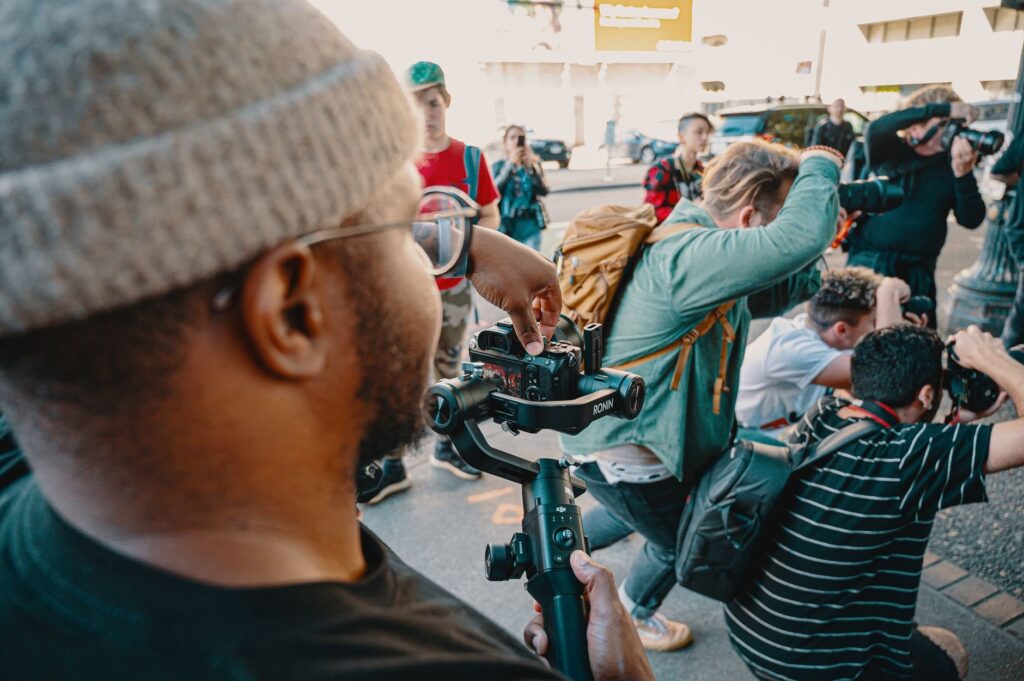
Photographers gathered shoulder to shoulder on a pavement. When a crowd shoots the same moment, many near-identical pictures appear with different captions, and the captions are where interpretation creeps in.
Talk shows and interviews
A talk show produces celebrity news by putting a person in front of a host and a camera, and what is said can be checked against the broadcast. That makes interviews a primary source for what the guest said, though not for whether it is true.
Talk-show moments also generate stories that have nothing to do with rumour. NBC News reports that Debbie Shields has spoken out about her viral moment riffing with Conan O’Brien. The story is about a clip travelling beyond its original audience, and the person in it explaining her side. This is a useful reminder that a viral moment and a verified account are separate things. The clip shows what happened on air, and the follow-up interview supplies her own account of it.
When a quote from an interview is circulating, apply two checks. First, find the recording or transcript and read the sentence in context, because a line pulled from a longer answer can mean the opposite of what the full answer meant. Second, check whether the quote is attached to the right programme and guest, since misattributed lines are among the most common errors. The guide to how to spot a fake celebrity quote covers the invented versions.
A host and guest face each other across a table with microphones between them. A recorded exchange like this is the original record of what the guest said, which clips and screenshots can only approximate.
Checking a rumor step by step
A rumour is true when a named party with direct knowledge confirms it, or when a verifiable record shows it. Everything else is a claim of varying strength. The routine below works on any celebrity story and takes a few minutes.
Name the claim. Reduce the headline to a single plain sentence: who did or is what. Strip out adjectives and questions. If the sentence turns out to be ‘people are talking about X’, you have gossip.
Find who is speaking. Is the claim made by the celebrity, a representative, a court, a company or an unnamed source? Move up this ladder as far as you can, because each step closer to the person with knowledge removes a layer of retelling.
Look for the primary statement. That means the post, release, filing, recording or transcript that the story is built on. If the story quotes it, the link should be there. If it describes it vaguely, search for it yourself.
Check for a second independent report. Several outlets repeating each other are one report. You need a separate outlet with its own sourcing, preferably an established entertainment trade publication or a wire service.
Look for later developments. Retractions, dismissals and corrections are published after the first wave of attention, and they are easy to miss.
Why later developments matter
Several of the NBC News headlines in the table are corrections to earlier moments. A woman who accused Jay-Z of rape has retracted the claim and, per the headline, says she ‘never met him’. Anyone who shared the original accusation has a stale claim in circulation. In another case, NBC News reports that Clavicular’s accuser dropped sexual assault claims from a civil lawsuit while a Massachusetts criminal rape case continues. That headline shows why a single word such as ‘lawsuit’ is not enough. The civil and criminal matters are separate and can move in different directions, so each statement needs its own check.
The Busfield headline teaches a related lesson. A judge tossing charges and citing prosecutor misconduct is a court outcome with a stated reason. It is not a verdict on any underlying allegation, and a careful reader repeats only what the report says. When allegations are serious, wait for a named, on-record outcome before drawing a conclusion, and avoid repeating anything that could be unfair if it proves wrong.
How a rumour travels
A claim gains force with each retelling because every repost removes some hedging and adds some confidence. By the third or fourth hand a ‘may be’ has become an ‘is’. Screenshots and short clips are especially prone to this, because they remove the sentence that qualified the claim. For a closer look at the pathways, read about how do celebrity rumors spread, and use the habit of tracing a post back to its first appearance before you repost it.
Casting, music and announcement rumors
Casting and booking rumours are easier to test than relationship gossip because they end in a public announcement. That endpoint gives you a measurable outcome, and it gives you something to hold sources to.
Treat the announcement as the benchmark
Film and music rumours claim that a person will appear in a project or perform at an event. Until the studio, artist or organiser says so, the claim is a prediction. When the statement arrives, record its date and compare it with the earlier rumour. If you do this over a period, you build a picture of which sources are early and right, early and wrong, or simply repeating what others said.
That date-keeping is the most useful habit in casting coverage. A report that appears just before an official announcement may have been tipped by the studio, or may have been a lucky guess, and the two are not the same. Only a record of earlier claims against later confirmations can tell you which. The guide on are movie casting rumors reliable applies this approach to film, and the one on reliable comic book movie scoopers looks at named reporters and their records.
An audience faces a lit stage with performers. Live-event bookings are among the rumours that end in a verifiable announcement, which is what makes them testable.
Music and event headlines
Headliner and tour rumours follow the same logic. The Jay-Z halftime headline is a good example of a story that is concrete and checkable. A reader who wants the real date can go to the original announcement, while a reader who saw only a repost has no way to know whether the claim was current. Always ask where the date comes from, and prefer the statement’s own timestamp over the date a page was shared.
Speculation about television casting or format works differently. The NewsNow line about Maya Jama and Celebrity Traitors is an item of viewer interpretation. It describes a reaction to something broadcast. You can check what was broadcast, but you cannot check what viewers read into it.
When to wait
Wait when the only source is anonymous. A prediction with no named speaker is not yet worth planning around, whether you are a fan or a writer.
Act on the statement, not the scoop. If a booking affects your plans, such as tickets or travel, rely on the organiser’s own announcement.
Treat a track record as a pattern. A source that has been right before is a reason to look closely, and it does not guarantee the next claim.
Fakes, hoaxes and clickbait
Fabrication is a separate problem from error. A fake quote, a faked photograph or a death hoax is built to travel, and it often borrows the look of a real report. The checks differ slightly for each, but the principle is the same: go back to the original.
Death reports
Few stories spread faster than a death. A genuine report looks like the Walter Koenig headline on NBC News, which says that the actor who played Chekov on the original Star Trek series has died at 90. It names the person, states the fact and gives the age. A hoax often relies on vague wording, a screenshot without a link or a page nobody recognises. Before sharing, look for the same news from an established outlet and from the family, a representative or another official voice. The dedicated guide to how to check if a celebrity death is a hoax goes through this in more detail.
Photographs and images
An image can be real and still misleading, if the caption misstates when or where it was taken. It can also be wholly generated or edited. Ask where a picture first appeared, whether a photographer or agency is credited and whether other angles of the same moment exist. The guide on how to tell if a celebrity photo is fake collects the practical checks.
Headlines built to be clicked
Clickbait headlines withhold the one fact that would let you decide whether to read: a name, an outcome, a verb. They lean on phrases such as ‘you won’t believe’ or on questions the article itself never answers. Compare the headline with the first paragraph. If the headline asks whether a star has done something and the article never says, the question was the product. A few reliable markers appear in the guide on how to spot clickbait celebrity headlines.
Plain news headlines, by contrast, give you the answer in the headline. The NBC News examples above all do. They tell you who, what happened and, often, why, which is the opposite of a teaser.
Judging sources and track records
A source earns trust through a visible record of being right, correcting mistakes and naming its sources. Measure each outlet by how its past claims turned out, and let brand recognition count for little.
Building your own scorecard
Keep a simple habit: when a story makes a specific prediction, note it, then note what happened. Over time, patterns show up. Some outlets are strong on one beat, such as film casting, and weak on relationships. Some sit on the fence until the announcement comes and then claim they knew. Judging by the pattern is fairer than judging by a single hit or miss. Questions about the category as a whole are taken up in the guide to are celebrity gossip sites reliable.
Learn from both outcomes
Rumours that proved right and rumours that proved wrong are equally instructive. Looking at celebrity rumors that turned out to be true tends to show that true ones had a traceable origin, such as a named party or a record. Looking at celebrity rumors that were false tends to show missing attribution, recycled claims and details that nobody could confirm. Studying both teaches you what to look for before the answer is known.
A quick decision guide
Share with attribution. The celebrity or a named representative said it, and you can link the statement.
Hold and watch. An established outlet reports it with named sourcing but the party involved has not responded.
Skip it. The claim relies on an unnamed insider, a screenshot with no origin or a headline that withholds its own answer.
Correct or remove. You shared something that has since been retracted or dismissed. Update the post and say what changed.
Frequently asked questions
Is one news headline enough to confirm a death?
A plain report from an established outlet is a strong lead, as with the NBC News report on Walter Koenig. For anything you plan to repeat, look also for the family’s or representative’s own statement.
If an accuser retracts, was the original claim false?
A retraction means the claim has been withdrawn. In the Jay-Z case NBC News reports the accuser said she ‘never met him’. Report what was said and when, and avoid adding conclusions the headline does not state.
What counts as a primary statement in celebrity news?
It is the original record: a post by the person, a release from their representatives or a studio, a recorded interview or a court action. A news story about any of these is a secondary account of it.
Is it fine to share a rumour if I call it unconfirmed?
Labelling helps, but sharing still gives the claim reach. If the rumour accuses someone of wrongdoing or reports a death, wait for a named, on-record source before posting.