Learning how to tell if a celebrity rumor is true starts with tracing it to the original statement from the person involved or their representatives, and treat every retelling, screenshot and photo as unconfirmed until it matches that statement.
Picture a screenshot in a group chat: a famous actor is supposedly ending a relationship, a grainy photo is attached, and the headline is in capital letters. The workflow below resolves that situation in order: check the page, trace the claim, test the photo, then look for the primary statement.
The method suits readers who want a repeatable habit rather than a list of warning signs. For wider context on how celebrity gossip circulates and gets checked, the hub guide covers the broader picture.
When a rumor first reaches you
The fastest check is to stop reading in the tab where the rumor appeared. A university fact-checking guide advises opening a second window to look up the claims, author credentials and organizations that appear in an article. For a celebrity story, that means searching the name of the person involved alongside the specific claim, and looking up who wrote the piece and who published it.
A written checklist keeps the order fixed, so a convincing headline cannot skip you ahead to sharing.
Do this before reacting or forwarding. Most rumors reach people as a headline in a news app, a social post or a forwarded image, and none of those formats shows where the claim began.
Print and screen coverage often sit side by side, which is why the second tab matters: each version of a story can be checked against the others and against the original.
If the second tab turns up nothing beyond copies of the same headline, the rumor is still unconfirmed. The next section helps decide how much weight the page itself deserves.
Reading the page for warning signs
The look of a story can tell you where to look harder. The table below turns the main warning signs into a first move for each.
What you notice
What it suggests
Planning use
Headline with excessive capital letters or emotional language
A serious red flag for an exaggerated or provocative story
Pause before sharing and look for the same claim in a calmer, named report
A claim that seems too good, too weird or too reactionary
It probably is false
Search the claim independently instead of trusting the page that makes it
A web address that is a slight variant of a well-known site
Possible deceptive site posing as a familiar outlet
Investigate the site and reach the real outlet by its own address
An article that cites sources
Worth checking, because an official-sounding group can still be biased
Open each cited source and see whether it actually says what the article claims
These signs come from the same university fact-checking guide, which treats them as prompts to investigate rather than final verdicts.
A story can pass every one of these checks and still be wrong. Calm formatting is not proof, so the next job is to find where the claim began.
Tracing the claim back to its origin
A rumor is only as strong as its earliest traceable source. Follow each link, quote and “according to” phrase backwards until you reach either a named person speaking on the record, an official statement, or nothing at all. The guide above recommends checking the sources an article cites, and warns that a source with an official-sounding name can still be biased.
Does repetition count as confirmation?
No. Many outlets repeating a rumor can mean they all picked it up from the same place. Entertainment journalism includes speculation, and one gossip blogger describing coverage of a Bond casting search says some of the speculation was strategically leaked or placed information. A placed item can appear across many outlets while remaining a claim from a single interested source.
A stack of identical front pages shows how one report can multiply: many copies in circulation do not mean many independent confirmations.
Use these decision bullets when you reach the end of a trail:
Named person on the record: treat the claim as stronger, then compare it with any statement from the celebrity or their representatives.
Unnamed insiders only: treat the claim as unconfirmed, however many outlets repeat it.
Trail loops back to a gossip post or social account: stop there and look for a primary statement instead of more retellings.
Source cited but not opened: open it before judging, since the cited page may not say what the article claims.
For a closer look at outlets themselves, see are celebrity gossip sites reliable. Photos are the next common weak point.
Tabloid covers use close-up portraits and bold headlines to sell a story, so the cover alone shows the pitch, not the evidence behind it.
Checking a photo attached to a rumor
A photo makes a rumor feel settled, but the university guide is blunt that not all photographs tell the truth, and images are often edited or digitally manipulated. A real photo can also be attached to the wrong story, so the test is whether the picture belongs to the claim being made.
How reverse image search works
Reverse image search starts from a picture instead of words. According to the same guide, it can help discover the source of an image and its possible variations. For a rumor photo, the aim is to find the earliest appearance and any different versions, such as a cropped or altered copy.
Tools anyone can use
Google image search: returns similar images and websites carrying the image or a similar one, which shows where else the picture appears.
Google Lens: identifies an image and the objects around it, useful when the picture shows a place, product or other recognizable item.
Bing Visual Search: searches the web using an image instead of text, giving a second set of matches when the first yields little.
These descriptions come from the university fact-checking guide. Running the same picture through more than one tool is reasonable, because each returns its own matches.
Reverse image search shows where a picture has been, not whether the story around it is true. If the earliest match predates the rumor, the photo is being reused. If it appears only in the rumor’s own retellings, the photo has no independent support. Candid pictures raise a separate question about where they come from, and how do paparazzi work explains how such images reach the press.
A workflow that ends at the primary statement
The steps above combine into a routine that works on any rumor. The last step is the one that settles most cases, because a primary statement outranks every secondhand account.
Open a second tab. Look up the claim, the author and the publisher before reading further.
Read the page for warning signs. Note shouting headlines, implausible claims and web addresses that mimic well-known sites.
Open every cited source. Confirm that each says what the article says it does.
Trace the claim to its earliest version. Ignore the number of outlets repeating it and look for who said it first.
Test any photo. Run it through Google image search, Google Lens or Bing Visual Search to find its source and variations.
Find the primary statement. Look for an official statement from the celebrity or their representatives, or a report that quotes one directly, and compare its wording with the rumor.
If the primary statement contradicts the rumor, the rumor is false as stated. If it confirms the rumor, the claim is supported by the strongest evidence available. If it is silent, the rumor stays unconfirmed.
When there is no statement yet
Silence is common early in a rumor’s life, and the right move is to wait, not to settle the question by volume of coverage. The guide notes that information, like eggs and milk, can have an expiration date, so use the most up-to-date material and recheck later instead of relying on a report that may have been overtaken.
Holding back suits anyone about to share a claim that could embarrass or harm a real person. Sharing a correction later rarely reaches everyone who saw the original.
Frequently asked questions
Question
Answer
What is the fastest way to check whether a celebrity rumor is true?
Open a separate tab and search the claim, the author and any cited sources, then look for a statement from the celebrity or their representatives. A rumor with no such statement stays unconfirmed.
What are the signs of a fake celebrity story?
Exaggerated headlines with heavy capitals or emotional language, claims that seem too good or too weird, and web addresses that imitate well-known sites. Each is a reason to investigate, not a final verdict.
Does a rumor repeated by many outlets count as confirmation?
No. Repetition can trace back to one placed or leaked item, as a gossip blog says happened with some Bond casting speculation. Only an origin you can name and check counts.
How do I check whether a photo attached to a rumor is real?
Run it through reverse image search, such as Google image search, Google Lens or Bing Visual Search, to find its source and variations. Remember that photos can be edited or digitally manipulated.
Can an official-sounding source still be wrong?
Yes. A source that sounds official can be biased, so read what it actually says instead of trusting its name.
You’ve seen a studio rumor trending and want to post fast. Here is how to write about movie rumors responsibly: name where the claim came from, say what is unconfirmed, and stay ready to correct the piece.
This workflow sits within our broader pop culture commentary coverage. It is about sourcing and labelling, not ranking rumors or reacting to them. The aim is for a reader to see how much is actually known.
Separating a rumor from a confirmed report
A confirmed report rests on an original source you can identify and a statement that source stands behind. A rumor is anything short of that. The SPJ Code of Ethics (revised in 2014) tells journalists to verify information before releasing it and to use original sources whenever possible. In entertainment journalism that principle becomes three quick questions:
Who said it first? If you cannot name the origin, you are repeating a claim, not reporting it.
Is the source on the record? A named person or an official studio channel can be checked. An unnamed account can only be described.
Has anyone with a stake responded? A claim nobody connected to the project has addressed remains unconfirmed, however widely it spreads.
Trace the claim to where it began
Most movie rumors pass through several reposts before they reach you, and each hop strips away detail about the original basis. Work backwards until you reach the first public appearance, then record what that first source actually said rather than what later headlines claimed. A simple source log is enough: the claim, the original source, how you reached it, and what has and has not been confirmed.
An illustrative film-camera image: production-level details such as casting and shooting plans are the kind of information that tends to leak first.
Press releases and official channels
A press release is a news story written by a public relations professional and sent to targeted members of the media. Its job, as one marketing guide puts it, is to give media outlets pre-packaged, factual content for building news stories. So a studio release confirms that the studio said something, in the studio’s own framing. The SPJ code asks journalists to identify content provided by outside sources, whether paid or not, so attribute the announcement to the studio rather than presenting it as your own finding.
Official artwork and social posts are studio-supplied material too, and our guide on how to read a superhero movie poster shows how to read such marketing closely without over-reading it.
Judging how reliable a movie scoop is
Reliability depends on how the source is identified and how directly it knows the information. The SPJ code says the public is entitled to as much information as possible to judge the reliability and motivations of sources. Use the table to decide what a claim can honestly be called.
Source situation
What it tells you
Planning use
Studio press release or official account
Confirms the studio made the statement, framed as the studio wants it.
Attribute by name: “the studio announced”. Do not add details the release does not contain.
Named person on the record
The claim can be checked and the speaker can be held to it.
Quote or paraphrase with the name and role.
Anonymous source with a stated reason for anonymity
Weaker than on-the-record, but readers can weigh it.
Describe the source’s position and explain why anonymity was granted.
Repost or aggregator citing another outlet
Second-hand; the original basis may have been lost.
Go to the original report and credit it, or hold the story.
Unnamed claim with no explanation or evident motive
Nothing to judge the source by.
Treat it as a rumor. Never present it as a report.
The SPJ code says to reserve anonymity for sources who may face danger, retribution or other harm and who have information that cannot be obtained elsewhere. It also says to consider a source’s motives before promising anonymity and to explain why anonymity was granted. Apply that test honestly. If the same information could be obtained on the record, an unnamed source is a weaker foundation, and your piece should say so rather than lending it extra weight.
Trade outlets as comparison points
Before you publish, check whether established trade publications such as Variety, Deadline or The Hollywood Reporter have covered the claim, and read how they attribute it. Their wording shows how much they are willing to stand behind. A claim that appears only on an unnamed account is a different thing from one reported with described sourcing, and your own phrasing should reflect that difference.
A general stack of print news, used here as a stand-in for the established outlets whose attribution wording you compare against.
Labelling an unconfirmed claim
The label belongs in the headline, not just the body, because many readers never get past the headline. The SPJ code asks for special care not to misrepresent or oversimplify in promoting, previewing or summarizing a story. A headline that states a rumor as fact breaks that rule however careful the article beneath it is.
In the headline
Put the status word next to the claim: “reportedly”, “rumored” or “unconfirmed”. Attribute to the source where space allows, so “Studio says” and “Report claims” do different jobs. Avoid a headline that sounds settled while the body hedges.
Notes kept by hand beside a phone: the origin of each claim gets written down before drafting begins.
In the body
Open with a status paragraph before any speculation. It should answer four things: who made the claim, how directly they know it, what the studio or other subjects have said, and what remains unconfirmed. A consistent ladder helps readers compare your posts:
Confirmed: an official source, on the record, has said it.
Reported: a named or described outlet or source says it, and the studio has not responded.
Rumored: the claim circulates without an identifiable origin.
Speculation: your own or others’ inference from known facts.
Keep your opinion apart from the reporting. The SPJ code is blunt about it: label advocacy and commentary. If you want to say what a casting rumor would mean for a franchise, put that in a clearly marked section after the status paragraph. Then set an editor’s note or status line near the top of the article, where readers will see it before the details.
When to wait for official confirmation
Wait when you cannot describe where a claim came from. The SPJ code states that neither speed nor format excuses inaccuracy, which applies equally to a quick social post and a full article. Being second to publish costs little. Being first with something wrong costs credibility.
Wait longer when a claim criticises or accuses someone. The SPJ code asks journalists to diligently seek subjects of news coverage so they can respond to criticism or allegations of wrongdoing. A rumor about conflict on a production is not ready until you have tried to reach the people it names, or at least the studio.
Rumors about how an adaptation treats its comic deserve similar patience. Judgements about fidelity are only as good as the material behind them, so hold the analysis until there is something official to look at. Our guide on how to compare a movie to the comic book covers that comparison once the film or footage is available.
Updating and correcting a rumor piece
A rumor post is a draft of the story, not the end of it. The SPJ code tells journalists to gather, update and correct information throughout the life of a news story, and to provide updated and more complete information as appropriate. When new facts arrive, work through these steps:
Decide what changed. The claim may now be confirmed, denied or still unresolved, and each needs different wording.
Update the status line first. Move the new status to the top and change the headline if it no longer matches the facts.
Add the new information. Say what the studio or source stated and where, instead of silently rewriting the old text.
Correct any mistake openly. The code says to acknowledge mistakes and correct them promptly and prominently, and to explain corrections and clarifications carefully and clearly.
A confirmed rumor still needs the label history: say that earlier coverage was unconfirmed and what changed. A denied rumor needs the denial where the original claim sits, not buried in a separate post that readers of the first one will never find.
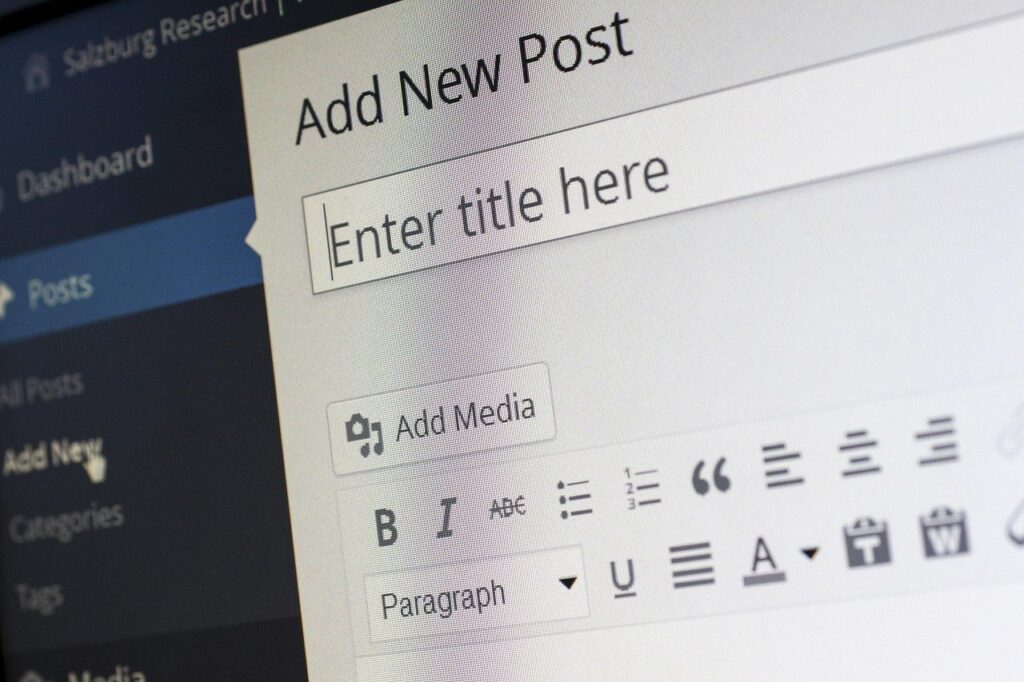
A generic post editor: the title field and the space above the first paragraph are where a status label and editor’s note can sit.
Frequently asked questions
Question
Answer
Is it acceptable to pay or trade favors for a movie scoop?
No. The SPJ code advises being wary of sources offering information for favors or money, and says not to pay for access to news.
Should I ask the studio for comment before posting a rumor?
Where the claim touches the studio or named people, yes. The SPJ code asks journalists to diligently seek subjects of coverage so they can respond, and a response (or the lack of one) belongs in your status paragraph.
How long is a typical press release, and why does it matter?
One marketing guide recommends keeping releases between 300 and 600 words and no longer than one A4 page. That short, packaged format is a summary of what the sender wants known, so treat it as a starting point for your reporting.
Celebrity gossip is unconfirmed talk about public figures. It becomes news only when a named person or organisation says it on the record, so judge every item by who is speaking and how they know.
The sections below separate gossip from entertainment news, show where stories begin and give a repeatable checking routine. Readers who want a compact checklist can go straight to how to tell if a celebrity rumor is true.
Gossip and entertainment news: where the line sits
Entertainment news reports things a named source has confirmed or that can be checked. Gossip passes along things people are saying. The two sit side by side on the same pages, in the same fonts, which is why readers confuse them.
What each one does
An entertainment news story answers a question that has an on-record answer: who was booked, who said what in an interview, what a court did, who died. The NBC News examples in the table show the pattern. A headline such as the one about a judge tossing charges names the actor, the action and the reason the judge gave. Every part of it can be checked against the court’s own record.
A gossip item works the other way round. It starts with a mood or a claim, such as a flirtation, a feud or a secret relationship, and then looks for something to attach it to. The NewsNow line about a ‘flirtation’ on Celebrity Traitors fuelling speculation is a good specimen. The word ‘speculation’ is the signal. Nobody involved has said anything, and the story is about the audience’s reaction.
The practical test is simple. Ask whether the headline’s main verb is something a named person did or said, or something other people suspect, claim or wonder. The first kind of verb belongs to news. The second kind belongs to gossip, however polished the page looks. A fuller account of the mechanics is in the guide to how does celebrity gossip work.
Where magazines and aggregators fit
Entertainment journalism is a wide field. The Harper’s Bazaar celebrity section, for example, is organised around red carpet, relationships and event coverage. That is a mix of things a reader can verify (an event happened, an outfit was worn) and things that depend on interpretation (a relationship read from a photograph). The section itself does not tell you which is which. You have to read each item for its sourcing.
Aggregators add another layer. The NewsNow celebrity feed groups items into Top Stories, Latest News and Most Read, and each entry shows the name of the originating outlet and a timestamp. That layout is useful because it shows who published a claim first. It also shows that prominence on a feed reflects reading and recency, not accuracy. A Most Read slot tells you what people clicked, and nothing more.
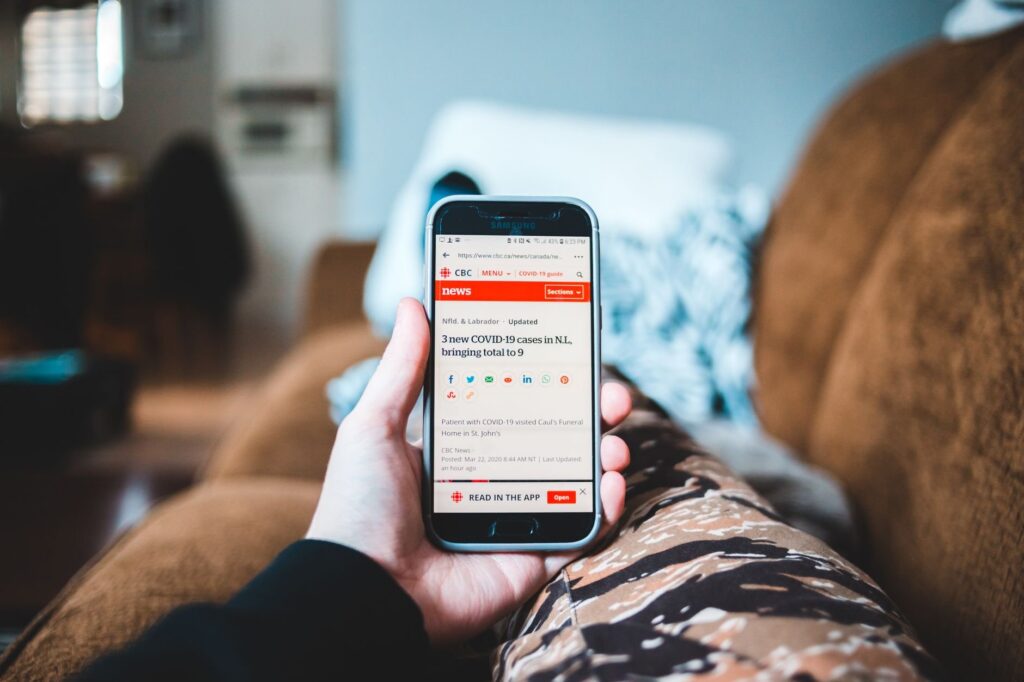
A news app headline on a phone screen: most celebrity stories reach readers this way, one headline at a time and stripped of the context around them. The headline shown is on another subject, so the image illustrates reading habits only.
Choosing how to read
Read for the verb. ‘Confirms’, ‘announces’ and ‘dies’ are claims about events. ‘Fuels speculation’ and ‘sparks rumours’ are claims about talk.
Read for the attribution. A quote with a name beats a paraphrase, and a paraphrase beats an unnamed insider.
Read the outlet’s role. A feed or aggregator points you to a story. It does not vouch for it. Follow the entry to the outlet that published it.
Where celebrity stories begin
Most celebrity stories start in one of a few places: an official announcement, an interview, a photograph or an unnamed insider. Each origin carries a different level of reliability, and the first job of any reader is to work out which one is behind the headline.
Official announcements and statements
Announcements come from the people or organisations who control the news: an artist, a studio, a representative, a venue or an event organiser. They are the strongest starting points because someone with authority put their name behind them. A headline like ‘Jay-Z to headline Super Bowl halftime show’ reports that kind of booking. The outlet’s version is a good pointer, but the announcement’s own date and wording belong to the original statement, so go to the artist’s or organisers’ channels when either matters.
The same applies to dates. A story that says an artist or studio ‘has announced’ something should be traceable to a dated post, release or press event. If you cannot find the original, the claim has not yet earned the word ‘announced’. Wire-service press releases and trade coverage are the usual places where those dated statements are recorded.
Photographs and sightings
Many stories begin with a picture: someone leaving a venue, arriving at an event, standing close to another public figure. Photographers wait for these moments outside venues, and the picture then gets a caption that supplies a meaning it cannot prove. The photograph shows that two people were in the same frame. The caption claims a relationship.
When you see a story built on a picture, separate what the image shows from what the headline says about it. For the working practices behind this kind of coverage, see how do paparazzi work.
A photographer aims a long lens from behind a hedge. Candid long-lens pictures show a moment from a distance, so the caption’s claim about what was happening needs separate support.
Unnamed insiders and blind items
Phrases such as ‘a source close to the star’ mark the weakest common origin. The insider may be a friend, a publicist, a rival or nobody at all, and the reader cannot tell which. Treat such a line as a lead that needs corroboration from someone on the record, not as evidence. The guide on what does a source close to the star mean goes through the wording in detail.
Blind items go further. They describe a celebrity without naming them and invite guessing. Guessing is the product. If you have never met the term, read what is a blind item, and keep in mind that an item nobody can be held to cannot be verified or corrected.
The celebrity’s own words
Some stories begin with the celebrity. When NBC News reports that Christina Applegate says she was misdiagnosed with multiple sclerosis, the claim is hers and the headline attributes it to her with the word ‘says’. That is the cleanest kind of origin there is, because the person with first-hand knowledge is speaking on the record. The right way to repeat it keeps the attribution. Say that she says it, and do not convert it into a general medical statement.
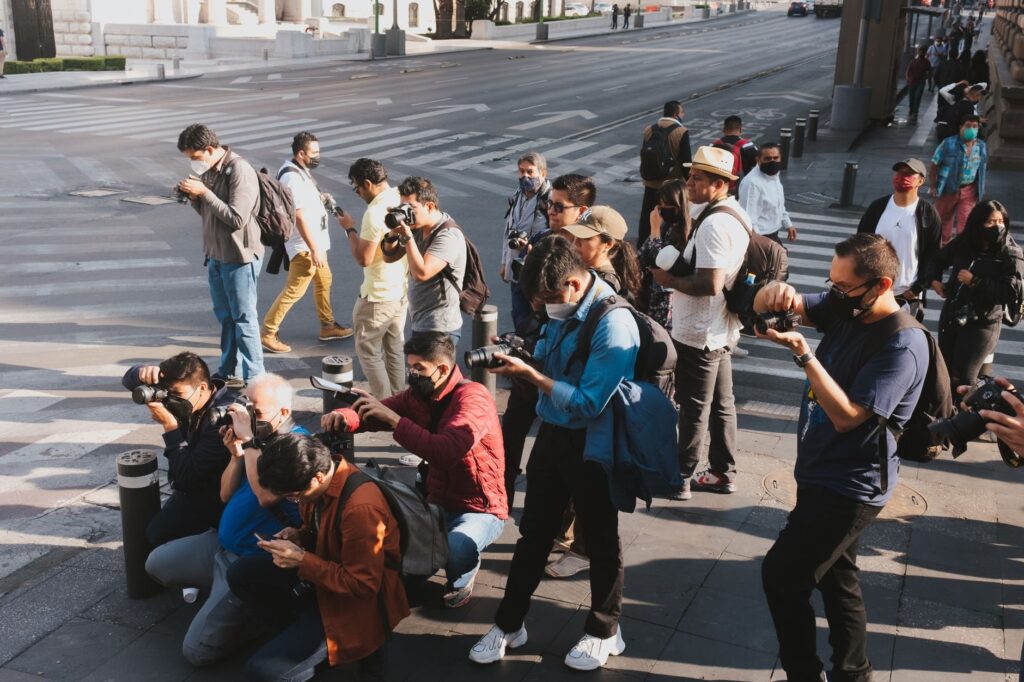
Photographers gathered shoulder to shoulder on a pavement. When a crowd shoots the same moment, many near-identical pictures appear with different captions, and the captions are where interpretation creeps in.
Talk shows and interviews
A talk show produces celebrity news by putting a person in front of a host and a camera, and what is said can be checked against the broadcast. That makes interviews a primary source for what the guest said, though not for whether it is true.
Talk-show moments also generate stories that have nothing to do with rumour. NBC News reports that Debbie Shields has spoken out about her viral moment riffing with Conan O’Brien. The story is about a clip travelling beyond its original audience, and the person in it explaining her side. This is a useful reminder that a viral moment and a verified account are separate things. The clip shows what happened on air, and the follow-up interview supplies her own account of it.
When a quote from an interview is circulating, apply two checks. First, find the recording or transcript and read the sentence in context, because a line pulled from a longer answer can mean the opposite of what the full answer meant. Second, check whether the quote is attached to the right programme and guest, since misattributed lines are among the most common errors. The guide to how to spot a fake celebrity quote covers the invented versions.
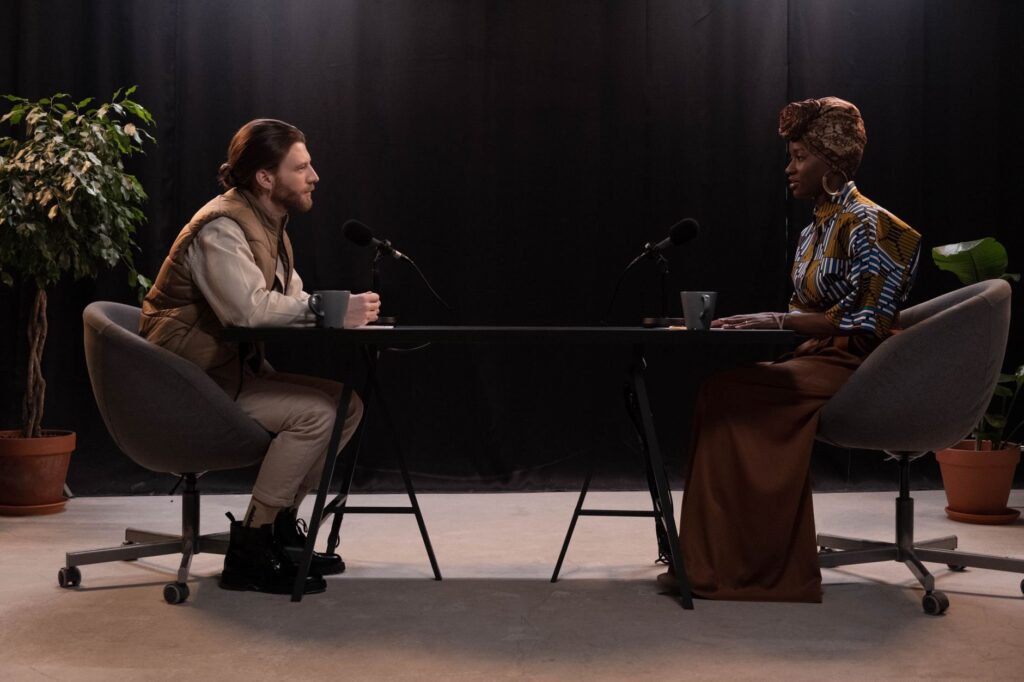
A host and guest face each other across a table with microphones between them. A recorded exchange like this is the original record of what the guest said, which clips and screenshots can only approximate.
Checking a rumor step by step
A rumour is true when a named party with direct knowledge confirms it, or when a verifiable record shows it. Everything else is a claim of varying strength. The routine below works on any celebrity story and takes a few minutes.
Name the claim. Reduce the headline to a single plain sentence: who did or is what. Strip out adjectives and questions. If the sentence turns out to be ‘people are talking about X’, you have gossip.
Find who is speaking. Is the claim made by the celebrity, a representative, a court, a company or an unnamed source? Move up this ladder as far as you can, because each step closer to the person with knowledge removes a layer of retelling.
Look for the primary statement. That means the post, release, filing, recording or transcript that the story is built on. If the story quotes it, the link should be there. If it describes it vaguely, search for it yourself.
Check for a second independent report. Several outlets repeating each other are one report. You need a separate outlet with its own sourcing, preferably an established entertainment trade publication or a wire service.
Look for later developments. Retractions, dismissals and corrections are published after the first wave of attention, and they are easy to miss.
Why later developments matter
Several of the NBC News headlines in the table are corrections to earlier moments. A woman who accused Jay-Z of rape has retracted the claim and, per the headline, says she ‘never met him’. Anyone who shared the original accusation has a stale claim in circulation. In another case, NBC News reports that Clavicular’s accuser dropped sexual assault claims from a civil lawsuit while a Massachusetts criminal rape case continues. That headline shows why a single word such as ‘lawsuit’ is not enough. The civil and criminal matters are separate and can move in different directions, so each statement needs its own check.
The Busfield headline teaches a related lesson. A judge tossing charges and citing prosecutor misconduct is a court outcome with a stated reason. It is not a verdict on any underlying allegation, and a careful reader repeats only what the report says. When allegations are serious, wait for a named, on-record outcome before drawing a conclusion, and avoid repeating anything that could be unfair if it proves wrong.
How a rumour travels
A claim gains force with each retelling because every repost removes some hedging and adds some confidence. By the third or fourth hand a ‘may be’ has become an ‘is’. Screenshots and short clips are especially prone to this, because they remove the sentence that qualified the claim. For a closer look at the pathways, read about how do celebrity rumors spread, and use the habit of tracing a post back to its first appearance before you repost it.
Casting, music and announcement rumors
Casting and booking rumours are easier to test than relationship gossip because they end in a public announcement. That endpoint gives you a measurable outcome, and it gives you something to hold sources to.
Treat the announcement as the benchmark
Film and music rumours claim that a person will appear in a project or perform at an event. Until the studio, artist or organiser says so, the claim is a prediction. When the statement arrives, record its date and compare it with the earlier rumour. If you do this over a period, you build a picture of which sources are early and right, early and wrong, or simply repeating what others said.
That date-keeping is the most useful habit in casting coverage. A report that appears just before an official announcement may have been tipped by the studio, or may have been a lucky guess, and the two are not the same. Only a record of earlier claims against later confirmations can tell you which. The guide on are movie casting rumors reliable applies this approach to film, and the one on reliable comic book movie scoopers looks at named reporters and their records.
An audience faces a lit stage with performers. Live-event bookings are among the rumours that end in a verifiable announcement, which is what makes them testable.
Music and event headlines
Headliner and tour rumours follow the same logic. The Jay-Z halftime headline is a good example of a story that is concrete and checkable. A reader who wants the real date can go to the original announcement, while a reader who saw only a repost has no way to know whether the claim was current. Always ask where the date comes from, and prefer the statement’s own timestamp over the date a page was shared.
Speculation about television casting or format works differently. The NewsNow line about Maya Jama and Celebrity Traitors is an item of viewer interpretation. It describes a reaction to something broadcast. You can check what was broadcast, but you cannot check what viewers read into it.
When to wait
Wait when the only source is anonymous. A prediction with no named speaker is not yet worth planning around, whether you are a fan or a writer.
Act on the statement, not the scoop. If a booking affects your plans, such as tickets or travel, rely on the organiser’s own announcement.
Treat a track record as a pattern. A source that has been right before is a reason to look closely, and it does not guarantee the next claim.
Fakes, hoaxes and clickbait
Fabrication is a separate problem from error. A fake quote, a faked photograph or a death hoax is built to travel, and it often borrows the look of a real report. The checks differ slightly for each, but the principle is the same: go back to the original.
Death reports
Few stories spread faster than a death. A genuine report looks like the Walter Koenig headline on NBC News, which says that the actor who played Chekov on the original Star Trek series has died at 90. It names the person, states the fact and gives the age. A hoax often relies on vague wording, a screenshot without a link or a page nobody recognises. Before sharing, look for the same news from an established outlet and from the family, a representative or another official voice. The dedicated guide to how to check if a celebrity death is a hoax goes through this in more detail.
Photographs and images
An image can be real and still misleading, if the caption misstates when or where it was taken. It can also be wholly generated or edited. Ask where a picture first appeared, whether a photographer or agency is credited and whether other angles of the same moment exist. The guide on how to tell if a celebrity photo is fake collects the practical checks.
Headlines built to be clicked
Clickbait headlines withhold the one fact that would let you decide whether to read: a name, an outcome, a verb. They lean on phrases such as ‘you won’t believe’ or on questions the article itself never answers. Compare the headline with the first paragraph. If the headline asks whether a star has done something and the article never says, the question was the product. A few reliable markers appear in the guide on how to spot clickbait celebrity headlines.
Plain news headlines, by contrast, give you the answer in the headline. The NBC News examples above all do. They tell you who, what happened and, often, why, which is the opposite of a teaser.
Judging sources and track records
A source earns trust through a visible record of being right, correcting mistakes and naming its sources. Measure each outlet by how its past claims turned out, and let brand recognition count for little.
Building your own scorecard
Keep a simple habit: when a story makes a specific prediction, note it, then note what happened. Over time, patterns show up. Some outlets are strong on one beat, such as film casting, and weak on relationships. Some sit on the fence until the announcement comes and then claim they knew. Judging by the pattern is fairer than judging by a single hit or miss. Questions about the category as a whole are taken up in the guide to are celebrity gossip sites reliable.
Learn from both outcomes
Rumours that proved right and rumours that proved wrong are equally instructive. Looking at celebrity rumors that turned out to be true tends to show that true ones had a traceable origin, such as a named party or a record. Looking at celebrity rumors that were false tends to show missing attribution, recycled claims and details that nobody could confirm. Studying both teaches you what to look for before the answer is known.
A quick decision guide
Share with attribution. The celebrity or a named representative said it, and you can link the statement.
Hold and watch. An established outlet reports it with named sourcing but the party involved has not responded.
Skip it. The claim relies on an unnamed insider, a screenshot with no origin or a headline that withholds its own answer.
Correct or remove. You shared something that has since been retracted or dismissed. Update the post and say what changed.
Frequently asked questions
Is one news headline enough to confirm a death?
A plain report from an established outlet is a strong lead, as with the NBC News report on Walter Koenig. For anything you plan to repeat, look also for the family’s or representative’s own statement.
If an accuser retracts, was the original claim false?
A retraction means the claim has been withdrawn. In the Jay-Z case NBC News reports the accuser said she ‘never met him’. Report what was said and when, and avoid adding conclusions the headline does not state.
What counts as a primary statement in celebrity news?
It is the original record: a post by the person, a release from their representatives or a studio, a recorded interview or a court action. A news story about any of these is a secondary account of it.
Is it fine to share a rumour if I call it unconfirmed?
Labelling helps, but sharing still gives the claim reach. If the rumour accuses someone of wrongdoing or reports a death, wait for a named, on-record source before posting.
What does a source close to the star mean? It means the outlet is relaying information from an unnamed person it describes as near the celebrity, so readers cannot check who spoke, how close they were or what they stand to gain.
An unnamed source leaves a reader to weigh a claim on its wording alone. The decision is less about whether the claim sounds plausible and more about how much the label actually tells you.
The speaker is hidden. You cannot look up the person’s role, history or track record, so the usual test of whether someone is in a position to know is unavailable.
Closeness is undefined. “Close to the star” and “insider” describe a relationship without naming a job, a date or a vantage point. The phrase does not separate a witness from someone repeating what they heard.
Motive is invisible. Ethics codes are described as guides through difficulties such as conflicts of interest. With a named person you can ask who benefits. With an unnamed one you cannot.
The count of witnesses is unknown. The standards summarised above distinguish a single eyewitness, whose account is reported with attribution, from two or more independent eyewitnesses, whose account may be reported as fact. An anonymous label does not reveal which situation applies.
In practice, treat a claim resting on one unnamed voice as an allegation, however confidently it is written. The next section looks at the phrases themselves.
Reading the common phrases
Attribution is the practice of telling readers where information came from. Anonymous attribution does this in a way that withholds the name, and the vocabulary used varies by outlet.
“A source close to the star”
This wording points toward a person near the celebrity without saying how near. It can sit comfortably beside a quote, which makes the quote feel firsthand even when the label does not establish that. A useful habit is to ask what the phrase would have to mean for the claim to be reliable, and then notice that the text never confirms it.
“An insider”
“Insider” is shorter and sounds more authoritative, yet it carries the same gaps: no role, no vantage point, no way to tell a single voice from several. A stronger-sounding label is not stronger evidence. Compare labels by what they let you check, not by how confident they sound.
Named versus unnamed attribution
A named person can be asked, contradicted or held to account. An unnamed one cannot, which is why the same sentence reads differently when the speaker is identified. When a story gives both kinds of attribution, give more weight to the named material and treat the anonymous part as the weaker support.
Why outlets use anonymous sources
Outlets use anonymous sources because some people will share information only if they are not named, and because journalism ethics asks reporters to weigh the harm that gathering and reporting can cause. The standards summarised here tell journalists to recognize that gathering and reporting information may cause harm or discomfort. Withholding a name is one way an outlet can act on that concern.
A notebook, phone and microphone on a table capture how a conversation with a source is recorded, though the reader sees only the summary.
Entertainment journalism sits inside the same framework as other reporting. The summary describes journalism ethics as principles of ethics and good practice for professional journalists. Reporters are expected to be as accurate as possible given the time allotted, and to seek reliable sources.
A notepad clipped to a board and a phone held to the ear show the basic mechanics of a source interview, which readers of the finished story never see.
The practical lesson is that anonymity is a trade. The outlet gets information it might not otherwise have, and the reader gives up the ability to judge the speaker. Anonymity is easier to accept when a story shows the effort behind it, such as multiple accounts or corroborating detail, and harder to accept when the unnamed person is the only support.
How tabloids get celebrity stories
A tabloid can build a story from several inputs: a named interview, a photograph, an eyewitness account or an anonymous tip. Each input has a different reliability profile. An eyewitness who is quoted by name is easier to weigh than a “source” described only by closeness to the star.
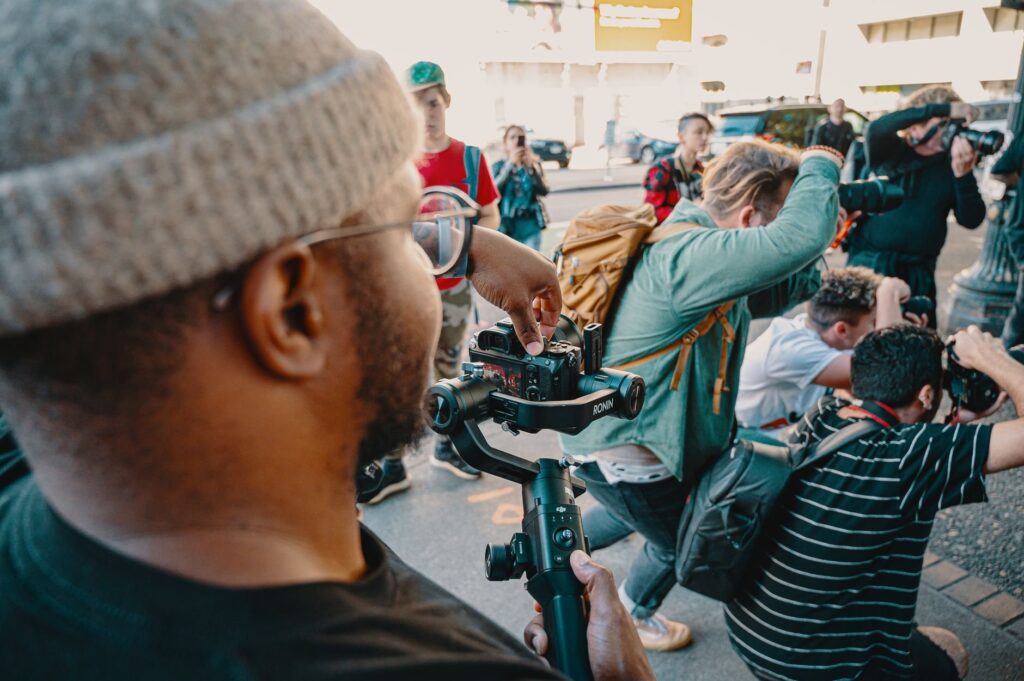
Photographers gathering on a sidewalk illustrate a route to a story that does not depend on anyone speaking, so a photo-led item and a source-led item should be read differently.
This matters for decoding wording. When a tabloid story is built around a picture, the picture can show what happened but not why. When it is built around an unnamed source, the words carry the whole claim. The explanation of motive or meaning that appears alongside a photograph is often where an anonymous voice enters. For the broader process, read how does celebrity gossip work.
A line of photographers in daylight, with pedestrians passing behind, shows how public the coverage of well-known people can be compared with the private sourcing behind many written claims.
Public figures, publicists and privacy
Public figures have fewer privacy rights than private persons in US law, according to the ethics summary. The same text recognizes that private people have a greater right to control information about themselves than public officials do. The effect is that coverage of celebrities faces fewer legal brakes than coverage of ordinary people, so the burden of judgement shifts toward the reader.
A publicist is a person whose job involves a star’s public image, and that is a reason to ask who the unnamed voice might be. A source could be a friend, a colleague or someone with an interest in how the story lands. Because ethics codes flag conflicts of interest as a recurring difficulty, a claim that happens to flatter or damage someone is worth a second look. The label alone will never tell you which it is.
Judging a claim that relies on an unnamed source
Judge an anonymous claim by what the text lets you test, not by how insider-sounding it is. These checks fit the wording itself, without needing to investigate the outlet.
Look for the count. Wording that points to separate, independent accounts is closer to the standard for reporting something as fact. A single voice, however labelled, is closer to the standard for reporting with attribution.
Check for a vantage point. If the story says what the person saw or heard directly, the claim is stronger than if it only gives their closeness to the star.
Notice who gains. A claim that serves an obvious interest deserves more caution, since conflicts of interest are a standing concern in ethics codes.
Separate fact from characterization. A named, checkable detail is stronger than an unnamed person’s description of someone’s feelings or intentions.
Wait for confirmation. If nothing named appears, treat the claim as unconfirmed and hold off on repeating it as fact.
These checks suit casual readers who want a quick filter. They do not replace the question of outlet reliability, which is a separate decision covered elsewhere on the site.
Frequently asked questions
What is an unnamed source in entertainment news?
An unnamed source is a person whose information appears in a story without their name attached. The outlet describes them in general terms, such as “insider” or “source close to the star”, and the reader cannot identify or contact them.
Is an unnamed source the same as an invented one?
No. The label itself does not show whether a person exists or spoke accurately. It only means the reader cannot check, so the wording should be weighed as a claim rather than treated as either proven or fabricated.
Does “insider” carry more weight than “source close to the star”?
Neither phrase names a role, a date or a vantage point, so neither is stronger evidence. One may sound more confident, but confidence in wording is not a measure of reliability.
How should a poll or percentage in a celebrity story be read?
The ethics standards say survey and statistical information deserve special treatment: conclusions should be communicated in precise terms, with estimated error and methodological flaws stated. A figure given without that context deserves caution.