Tag: movie marketing

  • Movie Marketing and Promotional Campaigns

    Movie Marketing and Promotional Campaigns

    The best movie marketing campaigns of recent years win by giving audiences something to touch, play with or join, not just watch. This shortlist sorts well-known campaigns by tactic so each contribution is easy to see.

    For wider release coverage, see our movie news. Pick a tactic below by what a film needs: a street moment, a tie-in partner, a social voice or a place fans can visit.

    • Need a shareable image: physical outdoor stunts and fan installations.
    • Need reach through partners: tie-ins and brand deals.
    • Need conversation online: platform-native jokes and in-character pages.

    Outdoor advertising: the sweating billboards for EXTRACTION 2

    Netflix built billboards for EXTRACTION 2 that simulate Chris Hemsworth sweating, according to Smart House Creative’s round-up of 2023 film marketing. The billboards sat on a sidewalk, so passersby could touch the “sweat” and take selfies.

    This is outdoor advertising that doubles as a photo prop. A standard poster is seen and forgotten. A billboard people touch gives them a reason to photograph it and post it, which carries the campaign past the street itself.

    An illuminated panel keeps advertising visible on a rainy street, a reminder that outdoor placements work in poor weather too. The panel is generic, not a film advertisement.

    Who it suits: action or spectacle films with a star face and a clear physical hook. Limits: the effect depends on foot traffic at a handful of sites. The stunt is worth little without the social posts that follow, so it works best paired with a hashtag or a shareable moment.

    A shelter poster sits at eye level for people waiting at the stop, which is the kind of captive street audience that outdoor placements aim for. The advertisement shown is illustrative, not a film campaign.

    Tie-in promotions: Barbie’s Airbnb Dream House and collectible containers

    Tie-in promotions work by attaching a film to a product, place or service that already has its own audience. The partner gets film-driven attention, and the film gets visibility in a setting outside cinema advertising.

    The clearest example from 2023 is Barbie. Smart House Creative lists the Barbie’s Malibu Dream House made available on Airbnb, with a Ken-themed makeover, as the biggest Barbie campaign element. The tie-in turned a film prop into a place people could imagine booking, so the news reached travel and lifestyle audiences as well as film fans.

    Limited-edition cinema containers

    The same round-up notes that limited-edition themed popcorn and soda containers at various theaters became a collectible promotion trend in 2023, continuing with Ghostbusters: Afterlife. These suit family and fan-franchise releases, where owning the item matters. The container sells the film at the exact moment someone is already buying a ticket.

    Limits: a tie-in is only as strong as the fit between the partner and the film. A product that feels bolted on earns little attention. The Barbie pairing worked because a house is part of the Barbie world.

    Platform-native stunts: Letterboxd, memes and a fictional LinkedIn page

    These campaigns use the habits of a particular platform. They suit films whose audiences already spend time there, and they lean on creativity rather than physical construction.

    Mission: Impossible Dead Reckoning on Letterboxd

    Per Smart House Creative, saving a review on Letterboxd triggered a secret message from the IMF, complete with a self-destruct countdown. It reaches the film’s most engaged viewers, people who log and review films, at the point where they are talking about it. The cost is low reach: only users of the platform see it.

    Cocaine Bear and the meme feed

    Cocaine Bear’s marketing relied on social trends: viral TikTok trends, Instagram memes and tweets written in the bear’s voice, as the same round-up describes. This suits a film with a self-aware, absurd premise, where the joke is the product. It is a poor fit for a tone-sensitive drama, where memes could cut against the film.

    Beau Is Afraid and MW Industries

    A24 created a LinkedIn page for a fictional company, MW Industries, with posts about plot developments. It is a narrow, deadpan tactic that rewards viewers who notice it, and it fits a film built on unease and odd corporate settings. It will not sell a broad audience on its own, so treat it as a fan-facing layer.

    Experiential marketing: a screening room built from an ark

    The Arc of Oblivion converted a documentary’s ark structure into a 24-person screening room where the film was screened for the public, with August screenings and live music, according to Smart House Creative. The small capacity is the point: a place people visit and talk about, not a mass-reach buy.

    Who it suits: documentaries and independent films whose audiences value atmosphere and word of mouth. Limits: a small room reaches few people directly, so the coverage and photos it generates carry most of the benefit.

    Brand partnerships and product placement: Spider-Man and Wicked

    Product placement puts a brand inside the film itself, while a partnership extends the relationship outside it. Social Samosa reports that brands from multiple categories partnered with Spider-Man: Brand New Day through in-film placements, digital campaigns, games, limited-edition products, food offers and fan experiences.

    That spread shows how a franchise film can offer a partner several routes, from a quick screen appearance to a product sold in shops. For a brand the in-film appearance is visible but brief, so the outside activity does most of the work.

    Wicked: For Good and fan-led collaboration

    Social Samosa also covered the sequel’s fan-driven, collaboration-heavy marketing, in a piece dated 21 Nov 2025. The takeaway is a different balance: collaboration builds on enthusiasm already in the audience rather than creating it. It suits a sequel with an established fan base.

    Comparing the tactics at a glance

    Campaign Tactic What it contributes Planning use
    EXTRACTION 2 Interactive sweating billboards A touchable street moment and selfies Suits star-led spectacle with a few high-traffic sites
    Barbie Malibu Dream House on Airbnb Reach into travel and lifestyle audiences Choose a partner that fits the film’s world
    Mission: Impossible Dead Reckoning Letterboxd review message Engagement among dedicated film fans Reaches a narrow, engaged group
    Cocaine Bear TikTok trends, memes, in-character tweets Humour that spreads with the premise Needs a premise that suits jokes
    Beau Is Afraid Fictional MW Industries LinkedIn page A hidden layer for observant fans Fan-facing support, not mass reach
    The Arc of Oblivion 24-person screening room A visit-worthy place and live music Small capacity, coverage-driven value
    Spider-Man: Brand New Day Multi-category brand partnerships Placements, products, food offers, games Suits franchise films with partner demand

    Campaign details in the table come from Smart House Creative and Social Samosa.

    How studios promote movies and what a press tour adds

    Studios usually combine several of these tactics rather than relying on one. Posters and trailers set the baseline, stunts and partnerships create moments, and publicity brings the film into the press.
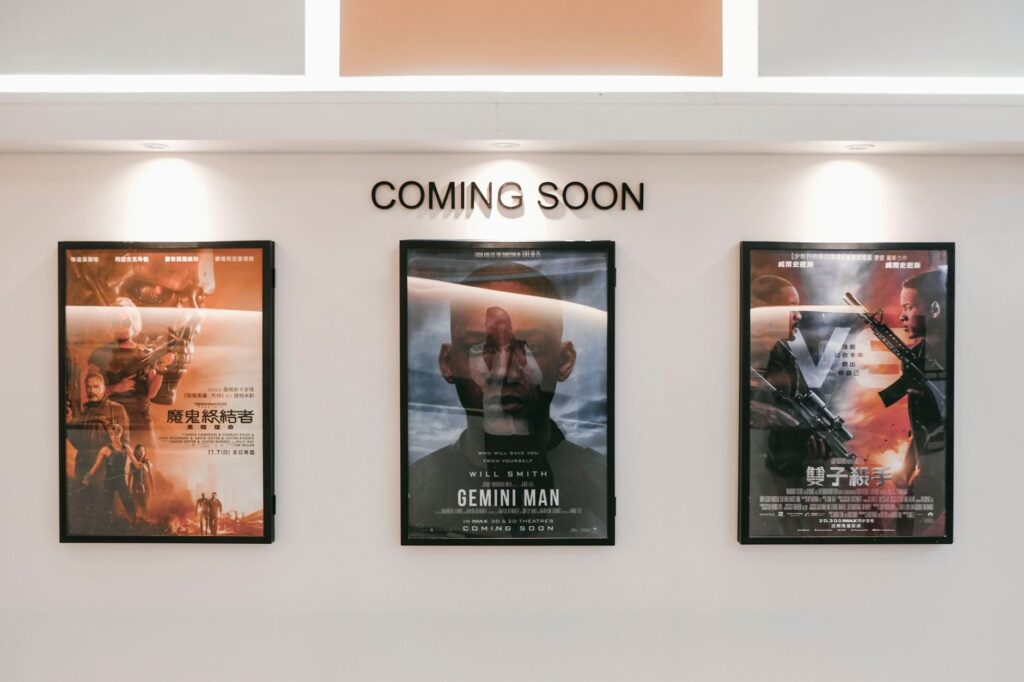
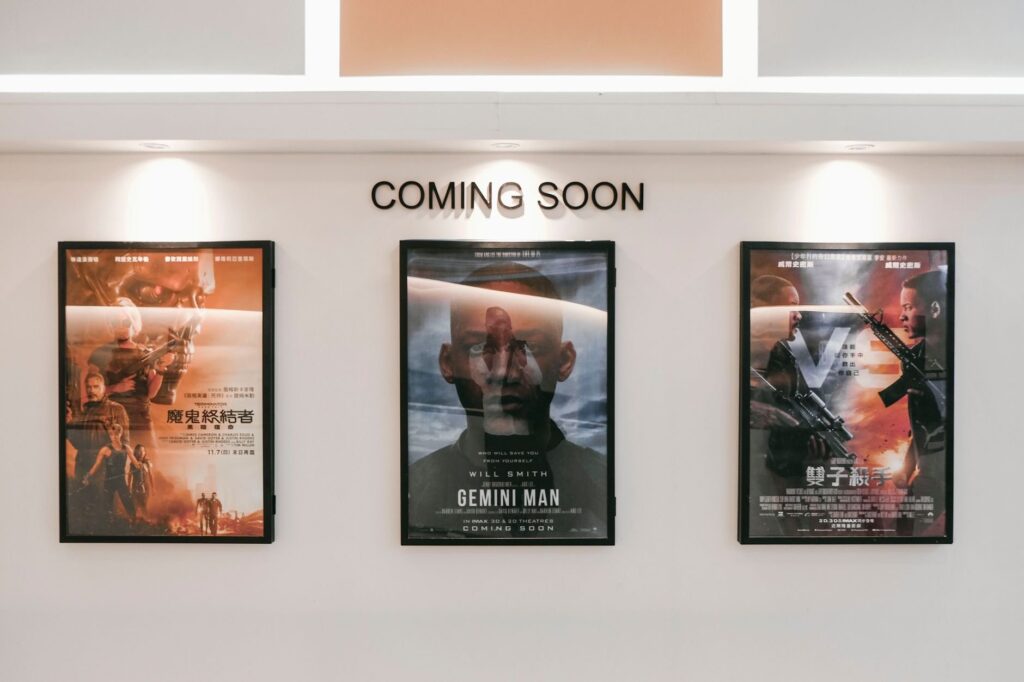
    Posters under a “Coming Soon” sign are the most familiar promotional layer, with titles in Chinese and English showing how artwork adapts by market.

    A press tour is the publicity layer: cast and filmmakers sit down for interviews on talk shows, with journalists and with online outlets, so the film is discussed in many places at once. It suits films that rely on star appeal or personalities, and it is less distinctive than a stunt because most major releases have one.

    Interviews like this one, with microphones held up in a plain room, are the basic unit of publicity. The scene is a generic interview, not a film event.

    Marketing costs vary with the tactic. A fabricated billboard or a built screening room needs materials and sites, while a meme account or a fictional LinkedIn page runs on existing platforms. Weigh that difference when judging which campaigns are practical to copy. Interest only counts when it becomes sales, so compare any buzz with the average movie ticket price and with box office predictions this weekend to see how it might translate.

    Decision checklist for choosing a tactic

    1. Identify the audience. Dedicated fans suit Letterboxd-style or LinkedIn-style hidden layers, while broad audiences need street or partner reach.
    2. Match the tone. Use memes only if the film’s tone can carry them.
    3. Look for a physical hook. A touchable or visitable element, like the sweating billboard or the screening room, gives people something to photograph.
    4. Test the partner fit. A tie-in should belong in the film’s world, as the Dream House did for Barbie.
    5. Layer, don’t rely on one. Pair a stunt with publicity and social sharing so its reach extends beyond the site.

    Frequently asked questions

    What are the best movie marketing campaigns?

    Campaigns that gave audiences an action, such as Barbie’s Airbnb Dream House, EXTRACTION 2’s sweating billboards and the Mission: Impossible Letterboxd message, are the most widely cited in the round-ups. Which is best depends on the film and its audience.

    How do tie-in promotions work?

    A film is linked to a partner’s product or space, such as a rental listing, themed cinema containers or Spider-Man: Brand New Day’s food offers and limited-edition products. The partner gains attention and the film gains exposure outside advertising.

    What is the difference between product placement and a tie-in?

    Product placement puts a brand inside the film. A tie-in or partnership works outside it, through products, offers, games or experiences. Spider-Man: Brand New Day used both.

    Do small films use these tactics too?

    Yes. The Arc of Oblivion’s small screening room and A24’s fictional LinkedIn page for Beau Is Afraid show how modest, inventive ideas can create attention without a large partner.
  • Teaser Trailer vs Official Trailer

    Teaser Trailer vs Official Trailer

    The difference between teaser and trailer comes down to length, footage and purpose: a teaser is usually under 1 minute and reveals very little, while a full trailer runs about 3 minutes and shows characters and plot.

    Both formats sit inside a film’s wider promotion, and readers who follow release announcements regularly will find more of that coverage in our movie news section.

    What a teaser trailer is

    A teaser trailer is the shorter format, and it holds information back on purpose. A Venison Media comparison of the two formats says teasers tend to be under the 1 minute mark and reveal very little about the film beyond details such as planned release dates, actors or the title. Some teasers run longer than that, so treat the figure as a typical value rather than a rule.

    The practical meaning is simple. A teaser is an announcement that a film exists and a hint of its tone. It is not built to explain the story, so it should not be judged as if it were.

    Length and pacing

    Teasers lean on very short clips from the film, often separated by fades to black, according to the same Venison Media write-up. Short clips and black gaps leave no room to follow a scene from start to finish. What a viewer takes away is an impression: a look, a mood, a sound, a name.

    That pacing suits viewers who want a quick signal that a film is coming without learning how it plays out. It is a poor basis for deciding whether the story will hold your interest, because the format is not designed to show one.

    Short online video is the setting many viewers meet teasers in, on a phone or laptop screen; this stock image is illustrative and does not show a specific teaser.

    Footage and dialogue

    A teaser may use no dialogue that relates to the film or its plot, per Venison Media. Silence, music or a single image can carry the whole piece. With no plot dialogue, there is nothing to spoil and nothing to explain.

    Teasers also do not always draw on the finished film. The same source notes that some teasers use footage created specifically for the teaser, a practice it describes as common in animated films. So a scene in a teaser is not guaranteed to be a clip lifted straight from the film. Anyone treating a teaser image as proof of what will appear on screen is reading more into it than the format promises.

    What a full trailer adds

    A full trailer is the longer, more informative format, and it usually runs about 3 minutes, give or take, according to Venison Media. The extra time lets it reveal the characters and the plot, though not everything. A trailer still has to leave reasons to buy a ticket.

    The way scenes are handled changes too. In a trailer the scenes are on screen for much longer than in a teaser, and the main characters’ costumes and weapons can be shown. That gives viewers something concrete to react to: who the people are, what they are up against and what the film looks like in motion.

    Sound also changes. The score or soundtrack may be revealed through a trailer more than through a teaser, though that is a tendency, not a guarantee. A viewer who cares about the music is more likely to get a meaningful sample from the longer format.

    Teaser versus trailer at a glance

    The table below puts the two formats side by side on the features that most often separate them. Use it to judge what each type of video can tell you.

    Feature Teaser trailer Full trailer What it means for viewers
    Typical length Usually under 1 minute; some run longer About 3 minutes, give or take Expect a glimpse from a teaser and a fuller pitch from a trailer.
    Information revealed Very little, such as release date, actors or title Characters and plot, but not everything Use a trailer, not a teaser, to judge the story.
    Clip style Very short clips, with fades to black Scenes on screen for much longer Longer scenes give a clearer sense of tone and action.
    Dialogue May use none that relates to the film or its plot Shows scenes from the film A silent teaser is normal and not a sign of a weak film.
    Footage origin Sometimes created specifically for the teaser Scenes from the film Do not treat teaser-only footage as a preview of the final film.
    Costumes and weapons Not a focus Main characters’ costumes and weapons can be shown Character design is easier to judge from the full trailer.
    Score or soundtrack Less likely to be revealed May be revealed more Music samples are more likely in the longer format.

    These contrasts follow the Venison Media comparison of film trailers and teasers.

    Timing and the completed film

    A trailer cannot be made before the film is completed, according to Venison Media. A trailer is therefore built from a film that already exists. A teaser is different. It relies on very short clips or on footage made only for the teaser, so it does not depend on a finished film in the same way.

    This explains why the two formats do different jobs. The teaser can signal that a film is on its way while very little is revealed. The trailer follows once there is a completed film to draw scenes from, and it carries the detail a teaser leaves out.

    Posters and first-look images work at the same announcement stage, and they are worth comparing alongside video when judging how a film is being introduced. Our guide to new movie posters covers that side of the campaign.

    Why films release more than one trailer

    Films release more than one trailer because each format does a different job. A teaser announces and intrigues while revealing very little. A full trailer then supplies the characters and plot that a teaser withholds. Releasing both lets a studio introduce a film in stages instead of showing everything at once.

    Trailer editors choose how long each scene stays on screen. A full trailer holds scenes longer than a teaser, which is why it can show more of the plot and characters.

    Types of movie trailers are often discussed under labels beyond these two. The teaser and the full trailer remain the most useful pair to separate, because they differ on measurable features: how long they run, what they reveal and what footage they use.

    Upcoming-release displays like this one belong to the same pre-release promotion as trailers; the posters shown are illustrative and are not tied to any teaser discussed here.

    Marketing does not guarantee a film’s commercial result. Readers curious about what happens when a promotional push does not turn into ticket sales can look at the biggest box office flops.

    Coming-soon signage is a reminder that a film’s promotion runs across several stages, with each trailer doing a different job before release.

    Reading each format sensibly

    Knowing the difference helps you decide what to expect from each video and what to avoid concluding from it.

    • Watch a teaser for the announcement. It confirms a title, cast or planned release date and sets a tone. It is the right choice if you would rather learn almost nothing about the plot.
    • Watch the full trailer to judge the story. Longer scenes, visible characters and a plot outline give you enough to decide whether the film appeals. It is the better choice if you care about the music too, since the score may be used more there.
    • Do not treat teaser footage as a promise. Because some teasers use footage created for the teaser itself, a striking image is not proof that the scene appears in the film.
    • Do not treat a trailer as the whole film. A full trailer reveals characters and plot but not everything, so there is still more in the film than the video shows.

    If a film has only a teaser out so far, wait for a full trailer before forming a view of the story. The teaser was not designed to carry that information.

    Frequently asked questions

    What is a teaser trailer in one sentence?

    A teaser trailer is a short promotional video that shows very short clips and reveals little beyond details such as the title, actors or planned release date.

    How long is a teaser compared with a full trailer?

    Teasers tend to run under 1 minute, although some are longer. A full trailer usually runs about 3 minutes, give or take, per Venison Media.

    Do teasers always contain footage from the finished film?

    No. Some teasers use footage made specifically for the teaser, which is described as common in animated films. A teaser scene may therefore not come straight from the film.

    Can a trailer be made before the film is finished?

    No. The Venison Media comparison states that trailers cannot be made before the film is completed, which is one reason a full trailer draws on finished scenes.